
Iran-US Conflict Escalates as Iran Targets Bahrain, Kuwait, and Jordan After American Strikes
Iran and the United States exchanged significant attacks for the tenth straight day as Iran targeted Bahrain, Kuwait, and Jordan. Explore the latest developments, the impact on the oil market, tanker incidents, Houthi threats, and diplomatic efforts.
Raja Awais Ali
7/21/20264 min read
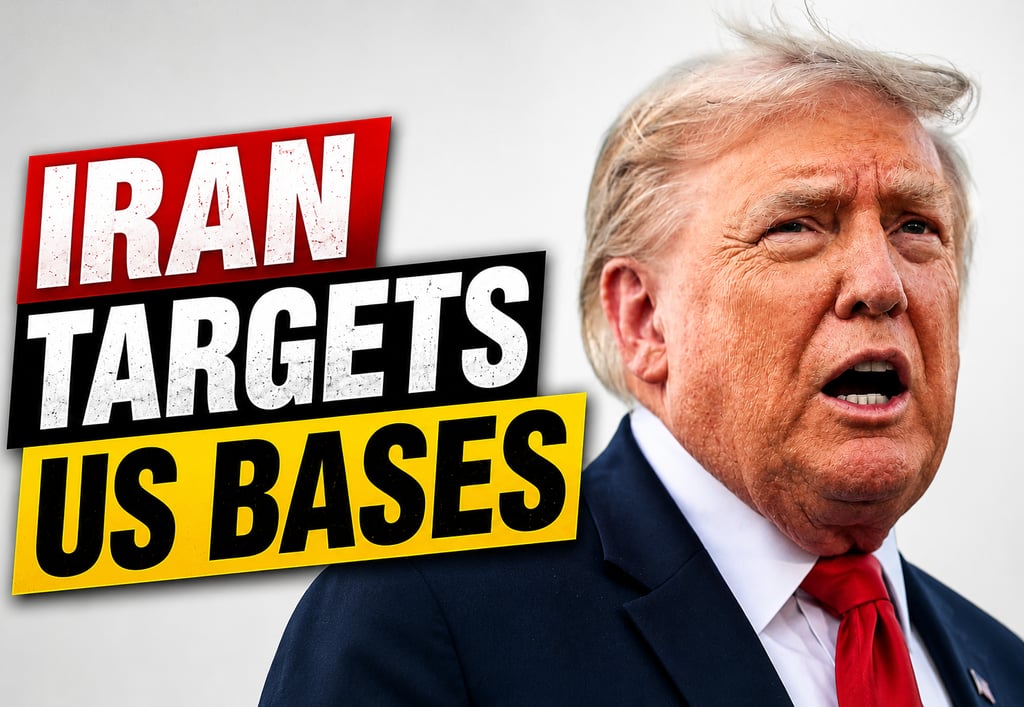

Iran-US Conflict Escalates as Iran Targets Bahrain, Kuwait, and Jordan After American Strikes
The conflict between Iran and the United States became more dangerous on July 21, 2026. Both sides exchanged military strikes for the tenth consecutive night. This escalation expanded the conflict beyond Iran, affecting Bahrain, Kuwait, Jordan, and key maritime routes in the Gulf. As military operations intensified across different areas, concerns over global energy supplies, commercial shipping routes, and regional stability continued to capture international attention.
The latest fighting erupted after U.S. President Donald Trump declared that Iran would face serious consequences for the deaths of American service members. Shortly after, U.S. forces targeted locations in southern Iran. According to U.S. Central Command, the operation focused on Iranian military command centers, missile and drone launch sites, maritime capabilities, and air defense systems. Iranian state media reported explosions near the southern city of Shiraz, while coastal cities such as Konarak and Chabahar were also reportedly affected. These strikes marked a significant escalation in a conflict that has already caused extensive destruction in the region.
Iran quickly retaliated by targeting American interests in the Gulf. Iranian Revolutionary Guard forces claimed they hit infrastructure in Bahrain linked to U.S. tech giant Amazon. Iranian officials stated this attack was a response to what Tehran described as a U.S. strike on the construction site of the planned Darkhovin nuclear power plant in Iran. Iranian state media also reported attacks on lodging facilities used by U.S. military personnel at Bahrain’s Sheikh Isa Air Base. At the time, there was no immediate confirmation from the United States, Bahrain, or Amazon regarding these claims.
In another development, the Iranian military reported launching drone attacks on three U.S. military bases in Kuwait. The Revolutionary Guards also claimed responsibility for an attack on a U.S. military site in Jordan. Jordanian authorities said their air defense forces intercepted and destroyed five Iranian drones before they could reach their targets. These events show how the conflict increasingly impacts neighboring countries, raising the risk of a wider regional confrontation.
The situation at sea worsened as well. The United Kingdom Maritime Trade Operations agency reported that a tanker navigating the Strait of Hormuz was hit by an unknown projectile. The crew had to abandon the vessel and escape to lifeboats. On the same day, Iran’s Revolutionary Guards noted that two oil tankers set ablaze following explosions while trying to pass through the southern route of the Strait of Hormuz. Though the exact timing and details remain unclear, these incidents reveal the escalating dangers in one of the world's most important energy routes.
Adding to worries, Yemen’s Iran-aligned Houthi movement announced plans to impose a naval blockade against Saudi Arabia if American attacks on Iranian infrastructure continue. The Houthis warned they might target shipping routes in the Bab el-Mandeb Strait, a crucial waterway linking the Red Sea to global trade routes. Such a measure would significantly pressure global energy markets and shipping networks.
Energy analysts caution that a complete blockage of the Bab el-Mandeb Strait could reduce global oil supply by about 7 percent because much of Saudi Arabia’s oil exports go through this region. The ongoing Gulf conflict has already disrupted around 10 percent of global oil shipments. Any extra restrictions on maritime traffic through either the Strait of Hormuz or Bab el-Mandeb could lead to severe consequences for international energy markets, supply chains, and global economic growth.
After the Houthi announcement, the Saudi-led coalition in Yemen said it had started implementing protective measures for vessels operating in and around the Bab el-Mandeb Strait. Maritime security experts have warned that if both critical energy chokepoints face continued threats, the effect on global trade could be unprecedented.
Despite the ongoing military escalation, diplomatic efforts to prevent a broader war are still underway. A senior Iranian official disclosed that Tehran received a proposal from international mediators for a ten-day ceasefire. This proposal aims to maintain the interim peace agreement signed last month and create a chance for broader negotiations that may lead to a lasting resolution.
Iranian Interior Minister Eskandar Momeni has also asked Pakistan to resume its role as a mediator between Tehran and Washington. Reports indicate that Momeni has arrived in Islamabad for discussions with Pakistani officials as diplomatic channels seek ways to lower tensions and prevent further escalation.
The human cost of the conflict continues to rise. Recent reports show that the number of U.S. military personnel killed in the combat has reached 17. In response, President Trump made a strong statement saying that every attack leading to the death of an American soldier would be met with an even greater response. On Truth Social, Trump stated that military leaders had been instructed to ensure Iran pays a heavy price for any future attacks on U.S. forces.
The conflict has already resulted in thousands of deaths, with the majority of casualties in Iran and Lebanon. Lebanon remains deeply affected by the regional crisis, with parts of the country facing ongoing security challenges linked to the broader confrontation involving Iran, Israel, and Hezbollah. Lebanese President Joseph Aoun is expected to meet with President Trump at the White House to discuss a proposal aimed at disarming Hezbollah and ensuring an Israeli withdrawal from occupied areas.
Global energy markets are closely tracking developments. Initially, fears of supply disruptions drove oil prices higher; however, reports of potential diplomatic initiatives eased market fears somewhat. As of July 21, 2026, Brent crude oil traded at approximately $88.87 per barrel, and U.S. West Texas Intermediate (WTI) crude stood near $82.47 per barrel. Although prices dipped slightly, traders remain worried that any major disruption to shipping through the Strait of Hormuz or Bab el-Mandeb could drive oil prices much higher in the coming days.
For oil-importing countries like Pakistan, this situation poses serious economic implications. Rising global crude oil prices could increase import costs and exert additional pressure on local fuel prices. Any long-term disruption in Gulf shipping routes would likely affect transportation costs, inflation, and energy security across many regions.
The coming days may be crucial for the future of the conflict. Military operations continue on various fronts, but diplomatic efforts are also gaining speed. The central questions facing the international community are whether Iran and the United States can return to negotiations before things spiral further out of control and whether the world’s key energy routes can remain open amid increasing security threats. The answers will shape not only the future of the Middle East but could also have significant consequences for global energy markets, international trade, and economic stability.
Stay informed with the latest national and international news.
© 2026. All rights reserved.