
Iran Seeks Greater Control of the Strait of Hormuz as U.S. Talks Continue and Oil Prices Slide
Iran is pushing for more authority over the Strait of Hormuz while indirect peace talks with the United States carry on in Doha. Explore how this affects global oil prices, shipping routes, energy supplies, U.S. crude inventories, international law, and the future of one of the world's most important waterways.
Raja Awais Ali
7/1/20266 min read
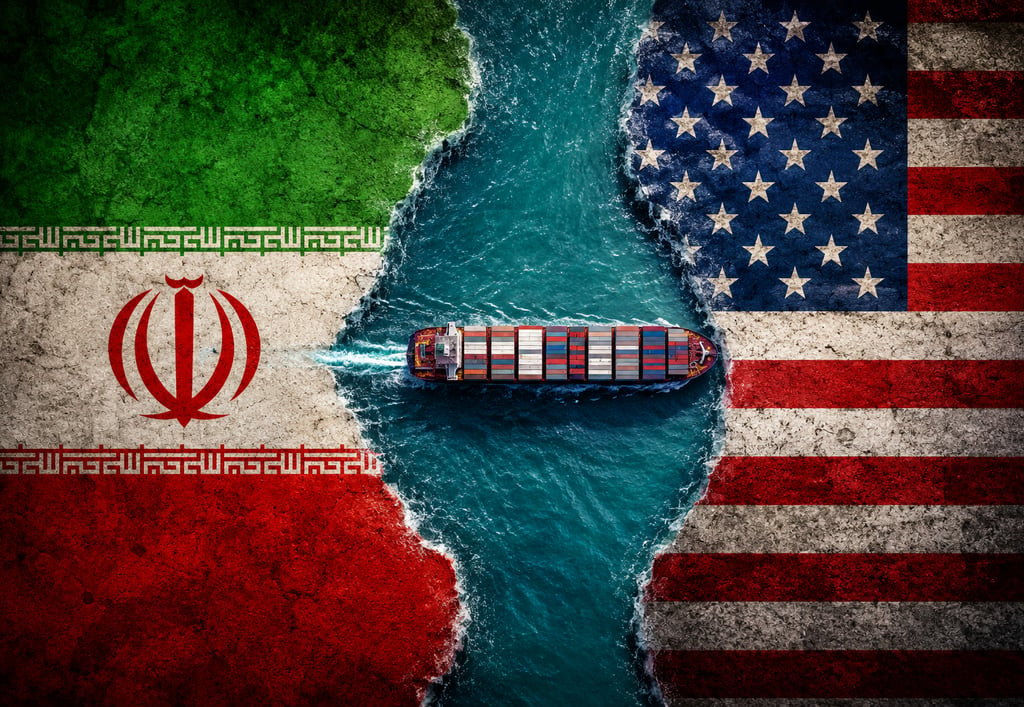
Iran's Hardline Position on the Strait of Hormuz, Ongoing U.S. Negotiations, and Historic Oil Market Volatility: Is the World Moving Toward a New Energy Crisis?
The global oil market, Middle Eastern politics, and international shipping are at a critical turning point. Decisions made in the coming weeks could have significant effects on economies worldwide. Peace talks are ongoing after the three-month conflict between Iran and the United States. However, a new dispute over the future of the Strait of Hormuz has emerged and created fresh uncertainty in global energy markets.
On Wednesday, oil prices dropped by more than 1% as investors awaited the results of negotiations between Iran and the United States. They also monitored new data about U.S. crude oil inventories. Brent crude futures fell by $1.14, or 1.6%, to $71.81 per barrel. Meanwhile, U.S. West Texas Intermediate (WTI) crude decreased by $1.11, or 1.6%, to $68.39 per barrel.
The main reason for this decline is the growing optimism that the talks between Tehran and Washington could lead to a lasting agreement, easing fears of supply disruptions in the Middle East. Still, investors remain cautious because the negotiations have not yet reached a final resolution, and the dispute over the Strait of Hormuz could escalate into a larger geopolitical crisis.
Tamas Varga, an analyst at PVM Associates, noted that the slow pace of talks between Iran and the United States is causing concerns about potential supply issues. However, investors remain hopeful that the obstacles to progress will eventually be resolved. Varga mentioned that the market's downside bias remains for now, but proof in the form of significant inventory reductions or a renewed closure of the Strait of Hormuz could quickly change market sentiment.
Indirect technical talks between Iran and the United States are underway in Doha, with Qatar and Pakistan as mediators. Sources close to the discussions say that representatives from both countries are not meeting directly. Instead, communications are happening through these intermediary nations as efforts continue to bridge their differences.
The White House stated that Jared Kushner, son-in-law of U.S. President Donald Trump, and special envoy Steve Witkoff arrived in Doha on Tuesday for what officials called high-level discussions. However, both Iran and Qatar have made it clear that the American delegation will not meet directly with Iranian officials, and that all communications will continue through mediators.
These diplomatic efforts take place during one of the most volatile times for global oil markets in recent history. In the second quarter of 2026, Brent crude prices fell by about $45 per barrel, marking the largest quarterly decline since the global financial crisis of 2008. U.S. crude futures also declined by around $31 per barrel, representing their biggest quarterly loss since 2020, when the COVID-19 pandemic severely impacted global energy demand.
Just a few months earlier, the conflict between Iran and the United States in March had driven oil prices sharply higher. Yet, progress toward ending the conflict and restoring stability has largely removed the geopolitical risk premium that had previously kept prices high.
After five consecutive months of price increases, analysts have now lowered their 2026 oil price forecasts for the first time since the Iran conflict began. A Reuters survey found that the reopening of the Strait of Hormuz and decreased concerns about prolonged supply disruptions significantly influenced this change in outlook.
U.S. Vice President JD Vance stated that oil flows through the Strait of Hormuz have mostly returned to pre-war levels, and tanker traffic through the crucial shipping route has begun to recover. However, despite these positive signs, a new dispute is arising that could threaten stability in global energy markets again.
According to two senior Iranian sources, Tehran is determined to get international recognition of its authority over the Strait of Hormuz. Iran believes it should not only oversee navigation through the strategic waterway but also charge fees to vessels entering or leaving the Persian Gulf. Iranian officials indicated they are ready to pursue these goals, even if it means using force.
Under the interim agreement made this month to end the three-month conflict with the United States, Iran allowed vessels to pass through the Strait of Hormuz free of charge for 60 days. However, Iranian officials argue that the wording of the agreement still gives Tehran the authority to decide which ships can use the waterway, which routes they must take, and when passage can be restricted.
Iranian sources mentioned that Tehran will not move on other areas of disagreement in the ongoing peace discussions until its authority over the Strait of Hormuz is formally recognized. If the current interim agreement expires without an extension, Iran could start charging ships for passage through the Strait in mid-August. While no official fee schedule has been announced, Iranian authorities have previously indicated that certain vessels paid navigation charges during the conflict.
The Strait of Hormuz's strategic importance is hard to overstate. Before the conflict, nearly one-fifth of the world's energy supplies moved through this narrow waterway. Large amounts of crude oil, natural gas, and other critical goods pass through the Strait daily on their way to global markets. Any arrangement that gives Iran permanent authority to impose regulations, restrictions, or transit fees would increase costs, delays, and risks for international shipping firms, energy-importing countries, and global supply chains.
The United States has firmly rejected Iran's stance. President Donald Trump stated last week that no tolls or transit fees should be applied to ships passing through the Strait of Hormuz unless the U.S. itself chooses to impose such measures. U.S. Secretary ofState Marco Rubio told Gulf leaders that no country has the right to block international shipping or charge fees on vessels using an international waterway.
Iran does not agree with this view. Tehran contends that the interim agreement permits it to retain overall control over passage through the Strait, even though fees are temporarily suspended during the current phase. Iranian officials also argue that while operational discussions with Gulf states may occur, Iran is not required to seek wider regional approval for its position.
Oman is also becoming a key player in this dispute. The southern side of the Strait of Hormuz runs along Oman's coastline, while Iran controls the northern side. Tehran has announced its intention to engage in talks with Oman about future transit routes and shipping arrangements through the waterway.
Tensions increased significantly over the weekend when Iran allegedly opened fire on four vessels trying to pass through the Omani side of the Strait without authorization. This incident led to a brief but intense exchange of fire between Iranian and American forces, highlighting how quickly the situation could deteriorate if negotiations break down.
Iranian officials maintain that the region cannot just go back to the way things were before the war. Tehran envisions future arrangements where it can dictate how ships enter and exit the Strait, determine which vessels may be denied access due to security risks, and collect fees for services rendered by Iranian authorities.
A senior Iranian official stated that if other countries do not accept these demands, Tehran is prepared to enforce them through force, even if it means escalating confrontation with the United States.
Another senior Iranian source described this situation as a "historic opportunity" for Iran. This official believes Tehran has survived what it considered the greatest strategic threat in its recent history—a conflict involving both the United States and Israel. As a result, Iran now sees a chance to gain a long-term geopolitical edge. Iranian officials believe that shipping nations, commercial stakeholders, and even major global powers may eventually accept some form of Iranian management of the Strait due to the rising economic costs associated with ongoing uncertainty.
Not everyone agrees with this view. Ali Ansari, a Professor of Modern History at the University of St Andrews, suggests that Iran might be overestimating its influence while underestimating Washington's readiness to oppose its demands. Ansari believes the risk of renewed conflict is much greater than many think because neither side believes it has lost.
A key part of the dispute is its legal aspect. The Strait of Hormuz lies between the territorial waters of Iran and Oman, but it is generally recognized as an international strait under the United Nations Convention on the Law of the Sea (UNCLOS). This convention guarantees freedom of passage for international shipping.
Interestingly, neither Iran nor the United States has signed this convention, while Oman has. Still, most countries, including the United States, see its rules as part of customary international law and view them as applicable regardless of formal membership.
Chris O'Flaherty, a former British naval officer and maritime law expert, points out that the convention lets Iran claim territorial waters extending 12 miles from its coastline, instead of the three miles recognized by older maritime rules. He noted that the Strait of Hormuz is just over 20 miles wide at its narrowest point, which makes questions of jurisdiction and navigation particularly sensitive.
O'Flaherty claims that most governments think international law on this issue is largely settled. However, Iran has decided to challenge these interpretations, creating new uncertainty about governing one of the world's most important maritime chokepoints.
Meanwhile, investors are waiting for official numbers from the U.S. Energy Information Administration (EIA). According to data from the American Petroleum Institute (API), U.S. crude oil inventories dropped by 6.1 million barrels last week. If the official figures show a similar decrease, it could indicate stronger demand and give further support to oil prices.
For now, global markets are focused on the negotiations in Doha, the future status of the Strait of Hormuz, and the next steps from both Tehran and Washington. If diplomacy works, stability might gradually return to energy markets. However, if negotiations fail, the world may face major oil price swings, supply disruptions, shipping uncertainty, and rising tensions in the Middle East.
Today, the Strait of Hormuz represents more than just a narrow passage. It has become the center of one of the most significant geopolitical and economic disputes of 2026—a dispute that could influence global energy security, international trade, and strategic stability for years to come.
Stay informed with the latest national and international news.
© 2026. All rights reserved.