
Iran Retaliates After Khamenei’s Death: Gulf Cities Under Attack, Middle East on Edge – March 2026
Following U.S. and Israeli strikes that killed Iran’s Supreme Leader Ayatollah Ali Khamenei, Iran launches retaliatory attacks on Dubai, Doha, and Oman. Global air travel disrupted, Gulf markets tumble, and regional tensions escalate. Full March 1, 2026 analysis.
Raja Awais Ali
3/1/20265 min read
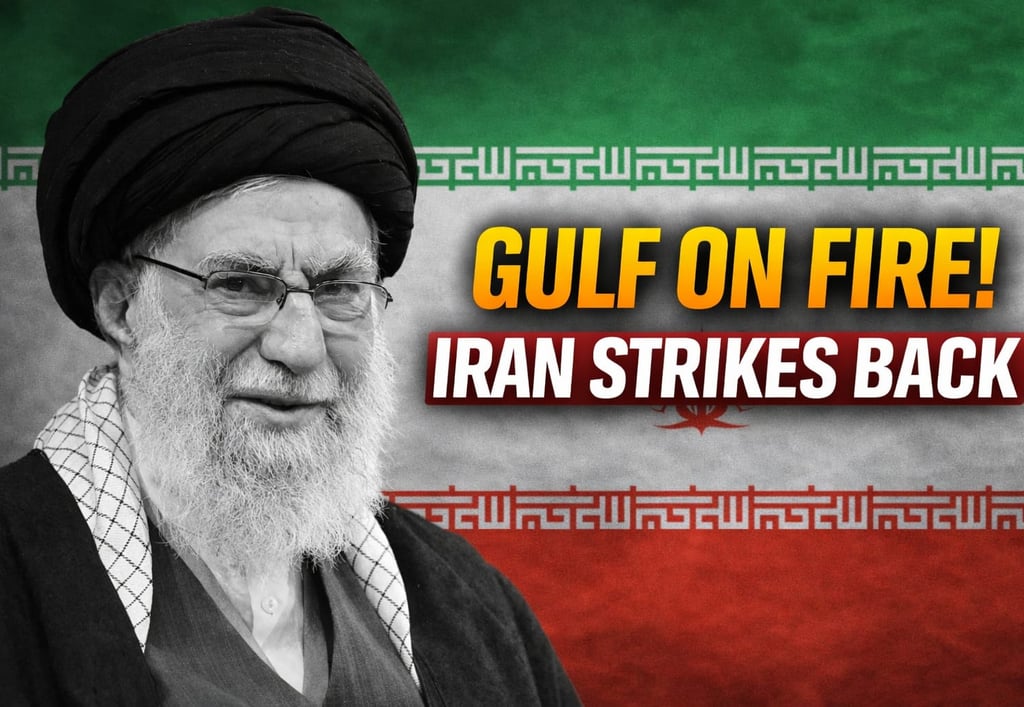
Middle East on Edge: Iran Retaliates After Khamenei’s Death, Gulf Cities Hit
The Middle East has entered a highly volatile and unprecedented phase following U.S. and Israeli airstrikes that killed Iran’s Supreme Leader Ayatollah Ali Khamenei on February 29, 2026. In retaliation, Iran launched targeted strikes against neighboring Gulf states, hitting urban centers, ports, and airports. These attacks have caused injuries, infrastructure damage, and significant disruptions in global aviation and financial markets, raising concerns of a prolonged regional crisis.
Iran’s Retaliation: Gulf Cities Under Fire
For the second consecutive day, residents of Dubai and Doha reported loud explosions and plumes of smoke. Iran, which had previously threatened U.S. bases in the region, expanded its attacks to civilian and commercial hubs.
In Dubai, debris from intercepted Iranian drones fell on residential areas, injuring two people. Landmarks such as Burj Al Arab, Palm Jumeirah, and Dubai International Airport sustained structural damage. Meanwhile, Jebel Ali Port, one of the busiest maritime hubs in the Middle East, was engulfed in thick black smoke after missile debris sparked a fire.
Oman faced retaliatory attacks for the first time, with Duqm Commercial Port targeted by two drones, injuring a port worker. Qatar reported a minor fire in an industrial zone after missile debris fell, demonstrating the broad scope of Iran’s retaliatory capabilities.
These attacks underline Iran’s strategy to project power beyond its borders and keep Gulf nations under constant pressure, even if U.S. bases were the original declared targets.
Israel’s Offensive: Tehran in the Crosshairs
Simultaneously, Israel launched a major wave of airstrikes over central Tehran. According to Israeli military spokesperson Lieutenant Colonel Nadav Shoshani, the campaign aimed to dismantle Iran’s air defenses and target military-industrial facilities. Israel confirmed that ground forces would not be deployed, but air operations are intended to significantly weaken Iran’s military infrastructure.
Iran’s state media confirmed that Ayatollah Ali Khamenei and several family members, including his daughter, grandson, daughter-in-law, and son-in-law, were killed in the strikes. Armed Forces Chief Abdolrahim Mousavi also died. To maintain continuity, Ayatollah Alireza Arafi was appointed to the temporary Leadership Council, alongside President Masoud Pezeshkian and Chief Justice Gholamhossein Mohseni Ejei, until a new Supreme Leader is elected by the Assembly of Experts.
Global Reactions and Diplomatic Fallout
The international community reacted swiftly. Russian President Vladimir Putin condemned the killings as a “cynical violation of international law,” while EU foreign policy chief Kaja Kallas called it a defining moment in Iran’s history, suggesting that a path toward internal reform and increased freedom for Iranian citizens could emerge.
In the Gulf, Anwar Gargash, adviser to the UAE president, urged Tehran to “return to its senses” and reminded Iran that its Gulf neighbors were not the target of this conflict. Nonetheless, cities like Dubai bore the brunt of retaliatory attacks, highlighting the vulnerability of urban centers in the region.
U.S. President Donald Trump warned that any further Iranian retaliation would be met with “force never seen before,” while Iran vowed “terrifying blows” against U.S. and Israeli targets. This tit-for-tat escalation underscores the risk of prolonged regional instability.
Internal Turmoil in Iran
Within Iran, public reaction has been sharply divided. While mourners gathered in Enghelab Square, Tehran, some Iranians celebrated Khamenei’s death in cities like Karaj, Dehloran, Izeh, and Lapuee, toppling statues and dancing in the streets. Videos circulating on social media show citizens burning monuments of Ayatollah Ruhollah Khomeini, the founder of the Islamic Republic, signaling deep socio-political fractures.
Other citizens expressed outrage and vowed to retaliate. University student Hossein Dadbakhsh in Mashhad said, “I am ready to sacrifice my life for Islam and for my Imam Khamenei. The Zionist regime and Trump will pay a heavy price for the martyrdom of our leader.”
This internal divide may influence Iran’s political future and the response of its military and elite Revolutionary Guards to further attacks.
Regional Unrest: Pakistan and Iraq
The geopolitical ripple effects extended to neighboring countries. In Pakistan, protesters clashed with police outside the U.S. consulate in Karachi, leaving nine dead. In Iraq, Iranian-aligned demonstrators gathered outside the Green Zone in Baghdad, prompting security forces to use tear gas and stun grenades.
These events demonstrate how Iran’s actions reverberate beyond its borders, stirring unrest in countries with significant Shi’ite populations or close political ties to Tehran.
Air Travel Disruption: A Global Crisis
The attacks caused massive disruptions in global air travel. Airports in Dubai, Abu Dhabi, and Doha were closed or operated under severe restrictions. Airspace over Iran, Iraq, and Kuwait remained largely empty. Thousands of travelers were stranded in Asia and Europe, with reports from Bali, Dhaka, and Kathmandu showing long queues, canceled flights, and frustrated passengers.
Airlines rerouted flights, lengthening journeys and increasing fuel costs. Analysts warn that prolonged closures, including potential restrictions over Pakistan or Afghanistan, could create long-term disruptions to international aviation and logistics.
Financial and Market Impacts
The crisis also affected Gulf and regional markets. Boursa Kuwait suspended trading, Saudi TASI fell 2%, and Muscat MSX30 dropped 1.8%. Meanwhile, Saudi Aramco shares rose 2.6% amid expectations of higher oil prices.
Global oil prices surged as Barclays raised Brent crude forecasts to $100 per barrel, reflecting concerns over potential disruptions to shipping through the Strait of Hormuz. Egypt’s EGX30 fell 5.5%, showing that the economic impact extends far beyond the Gulf.
Strategic and Security Implications
The U.S.-Israeli strikes and Iran’s retaliation mark one of the most significant Middle East crises in decades. Iran’s ability to strike Gulf cities and ports demonstrates its regional reach, while internal political divisions may shape the next leadership.
Analysts warn that the conflict could intensify proxy wars in Iraq, Syria, Lebanon, and Yemen. Disruption of shipping through the Strait of Hormuz threatens global energy markets and trade. Airlines face continued scheduling challenges, increased fuel costs, and logistical pressures due to restricted airspace.
Looking Ahead
The next few days are critical. Iran is expected to appoint a new Supreme Leader, signaling political continuity, while U.S. and Israeli forces continue air operations over Tehran. The divide in Iranian society—between those mourning and those celebrating Khamenei’s death—could influence the country’s response to future attacks.
Global powers must balance deterrence with the risk of escalation. Gulf civilians remain at risk from missile and drone attacks. Travelers and airlines are reminded that regional conflicts can ripple across the world, disrupting schedules and commerce. Markets, shipping routes, and energy supplies remain highly vulnerable.
Conclusion
The death of Ayatollah Ali Khamenei and Iran’s retaliatory strikes have set off a chain reaction across the Middle East. From civilian injuries and infrastructure damage in Dubai and Doha to global flight disruptions and market volatility, the effects are far-reaching.
From Tehran to Muscat, and Dubai to Baghdad, every military action and political decision will influence not only the Middle East but also global security, trade, and energy markets. March 1, 2026, marks a pivotal moment in modern Middle East history, with the potential to reshape regional dynamics for years to come.
Stay informed with the latest national and international news.
© 2026. All rights reserved.