
Iran Refuses to Send Enriched Uranium Abroad as Trump Pressure Raises New Middle East Crisis
Iran has refused to send its enriched uranium stockpile abroad despite growing pressure from Donald Trump and Israel. The move could increase tensions across the Middle East, threaten Gulf stability, raise oil prices, and impact the global economy in 2026.
Raja Awais Ali
5/21/20264 min read
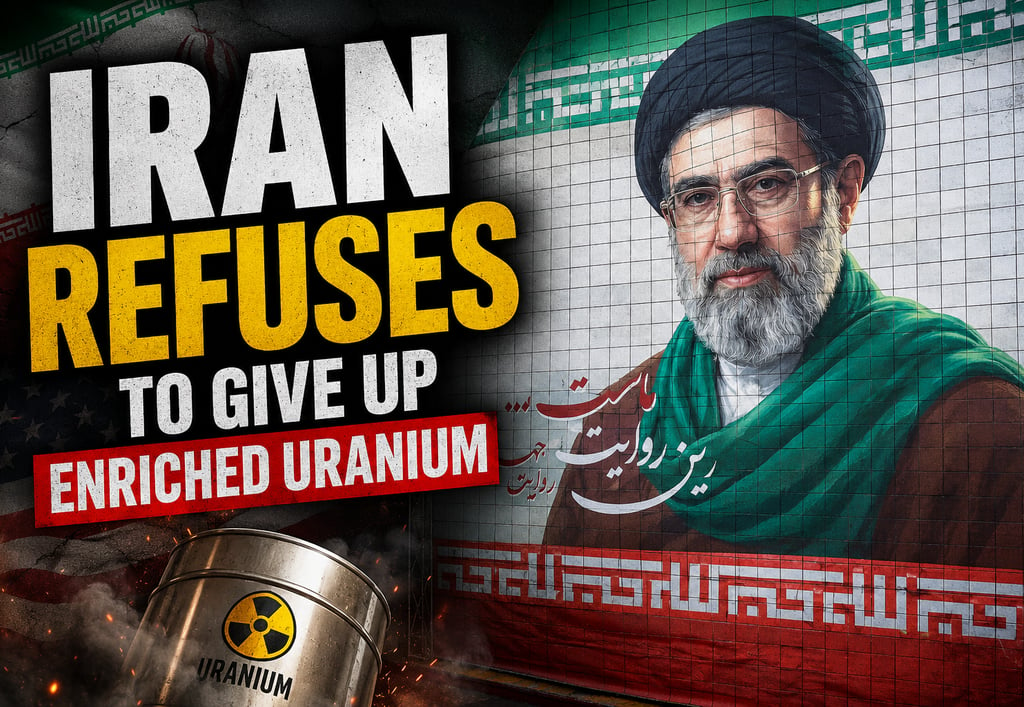
Iran Refuses to Send Enriched Uranium Abroad as Middle East Tensions Rise Again
The growing conflict between Iran, the United States, and Israel has entered another dangerous phase after new reports revealed that Iran’s Supreme Leader Ayatollah Mojtaba Khamenei has ordered that the country’s highly enriched uranium must remain inside Iran. The decision has created fresh tension in ongoing peace talks with the United States and raised fears of another major crisis in the Middle East.
According to senior Iranian sources, the new directive directly rejects one of Washington’s biggest demands. The United States wants Iran’s near-weapons-grade uranium stockpile to be removed from the country as part of any future peace agreement. American officials believe this step is necessary to stop Iran from moving closer to building a nuclear weapon.
US President Donald Trump has reportedly assured Israel that any future agreement with Tehran would include the removal of enriched uranium from Iranian territory. Israeli officials believe this issue is one of the most important conditions for long-term regional security.
However, Iran’s leadership now appears unwilling to compromise. Iranian officials believe that sending the uranium abroad would leave the country vulnerable if the United States or Israel launches future attacks. Tehran sees the uranium stockpile as a strategic security asset that protects the country during ongoing regional tensions.
The latest developments come after months of conflict across the Middle East. The war began following US and Israeli strikes on Iranian targets on February 28. Iran later responded with attacks targeting Gulf states hosting American military bases, while fighting also intensified between Israel and the Iran-backed group Hezbollah in Lebanon.
Although a ceasefire is currently in place, the situation remains extremely fragile. Diplomatic talks reportedly continue with mediation efforts involving Pakistan, but no major breakthrough has been achieved so far. At the same time, economic pressure from Washington and tensions around the Strait of Hormuz are making negotiations even more difficult.
The Strait of Hormuz remains one of the world’s most important oil routes, carrying a large share of global energy supplies. Any military escalation involving Iran could disrupt shipping traffic in the region and send oil prices sharply higher. Energy experts warn that another conflict in the Gulf could trigger inflation, fuel shortages, and economic pressure across Europe, Asia, and North America.
Gulf countries are also facing growing concern over the situation. Saudi Arabia, United Arab Emirates, Qatar, and Bahrain host important US military bases that could become targets if fighting resumes. Regional security analysts fear that another war could spread quickly across the Gulf and damage oil infrastructure, trade routes, tourism, and foreign investment.
Iranian officials also remain deeply suspicious of Washington’s intentions. Sources close to Tehran’s leadership reportedly believe that the current pause in fighting may only be temporary and that the United States could launch new airstrikes later. Iran’s senior negotiator Mohammad Baqer Qalibaf recently warned that both “open and hidden actions” by the US suggest preparations for possible future attacks.
At the same time, Trump has publicly warned that the United States is prepared to carry out further military action if Iran refuses to accept a peace deal. However, he also suggested that Washington may wait a few more days before making any final decision. These statements have increased uncertainty in global financial and energy markets.
The biggest disagreement remains Iran’s nuclear program. Tehran insists that it has the right to enrich uranium for peaceful purposes, while the United States and Israel continue to argue that Iran’s nuclear activities threaten regional stability. Israeli Prime Minister Benjamin Netanyahu has repeatedly stated that the conflict will not truly end unless Iran removes its enriched uranium stockpile, limits its missile program, and stops supporting proxy militias in the region.
Before the war began, Iran had reportedly shown willingness to send nearly half of its uranium enriched to 60% abroad. However, repeated threats from Trump and concerns over future attacks changed Tehran’s position. Iranian leaders now believe that making major concessions under military pressure could weaken the country strategically.
According to the International Atomic Energy Agency, Iran possessed around 440.9 kilograms of uranium enriched to 60% before American and Israeli strikes targeted nuclear facilities in 2025. This level of enrichment is far above what is normally required for civilian energy purposes and is considered close to weapons-grade material.
IAEA Director General Rafael Grossi previously stated that much of the remaining uranium stockpile was believed to be stored inside underground tunnel facilities near Isfahan, while additional material was located at the Natanz nuclear complex. Experts estimate that slightly more than 200 kilograms may still remain inside Isfahan facilities.
Iran maintains that some enriched uranium is needed for medical research and for operating Tehran’s research reactor, which uses uranium enriched to around 20%. Still, Western countries remain concerned that the country’s nuclear capabilities could eventually be expanded further if negotiations collapse completely.
The international consequences of another Middle East conflict could be massive. China and Russia continue to maintain close ties with Tehran, while European governments are trying to avoid another major war in the region. A larger conflict could create new diplomatic divisions at the United Nations and further destabilize global markets.
Financial experts warn that another military escalation involving Iran could increase global inflation, push oil prices to record highs, damage supply chains, and slow economic growth worldwide. Countries already struggling with energy costs and inflation may face additional pressure if Gulf oil exports are disrupted.
For now, diplomats are still searching for a possible compromise. Iranian officials have hinted that one option could involve diluting parts of the uranium stockpile under international supervision instead of sending it abroad completely. However, deep mistrust between Tehran, Washington, and Israel continues to block meaningful progress.
The Middle East now stands at a critical turning point. One wrong decision could trigger another regional war with global economic and political consequences. As tensions rise between Iran, the United States, and Israel, the coming weeks may decide whether the region moves toward diplomacy or returns to full-scale conflict once again.
Stay informed with the latest national and international news.
© 2026. All rights reserved.