
Iran Protests 2026: Reza Pahlavi Urges Global Action to Support Demonstrators
Exiled Iranian Prince Reza Pahlavi appeals to world leaders to protect protesters and push for reform amid escalating nationwide unrest in Iran.
Raja Awais Ali
1/16/20262 min read
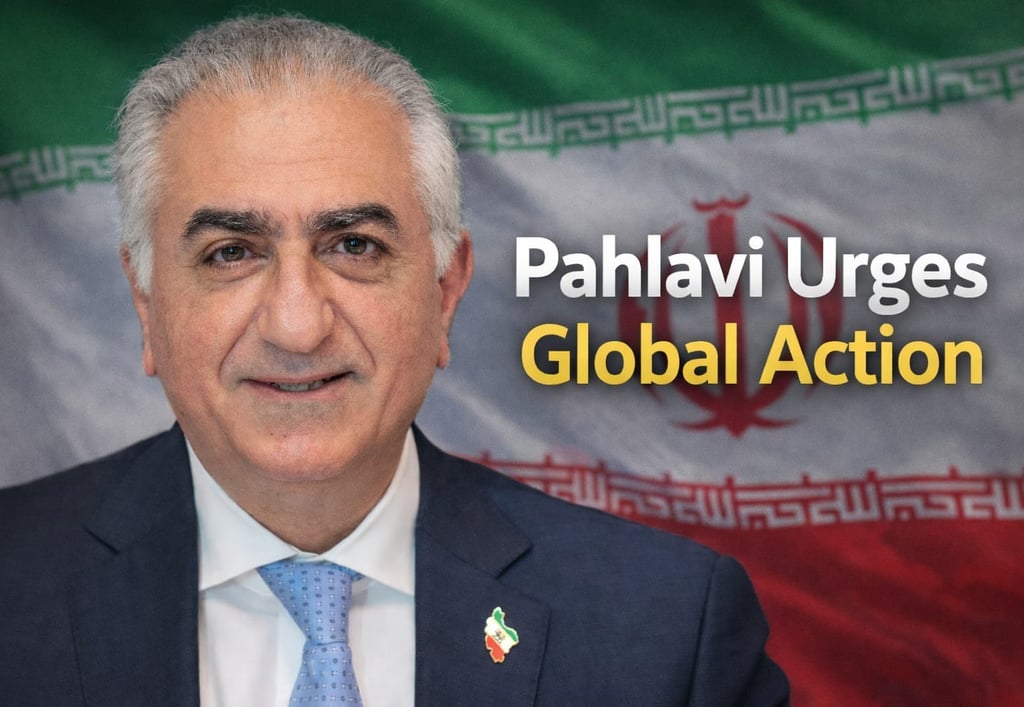
Iran Protests 2026: Reza Pahlavi Urges Global Action Amid Crackdown
On January 16, 2026, Iran’s ongoing nationwide protests — which began on December 28, 2025 — continue to challenge the clerical regime. In a major press conference in Washington, D.C., Reza Pahlavi, the exiled son of Iran’s last shah, called on the international community to step up political and diplomatic pressure to protect Iranian citizens and support a peaceful democratic transition.
Background: The Protests
The unrest initially erupted due to soaring inflation, rising food prices, unemployment, and the sharp depreciation of the Iranian rial. Demonstrations quickly spread from Tehran to cities across all 31 provinces, including Mashhad, Isfahan, Tabriz, and others, involving students, workers, teachers, and ordinary citizens. While economic hardship triggered the protests, they soon evolved into broader political demands for reform and an end to authoritarian clerical rule.
Government Crackdown and Communications Blackout
Iranian authorities responded with a near-total internet and communications blackout from early January 2026, severely limiting independent reporting and public communication. Security forces, including the Islamic Revolutionary Guard Corps, employed live ammunition, tear gas, beatings, and mass arrests to disperse demonstrators. The crackdown has resulted in thousands of deaths and tens of thousands of arrests, making this one of the most severe internal crises in modern Iranian history.
Reza Pahlavi’s International Appeal
During his press conference, Pahlavi outlined six key steps for global action:
Target Iran’s repressive leadership and security apparatus.
Sustain economic pressure and sanctions on regime figures.
Ensure unrestricted internet and communications access for Iranian citizens.
Demand the release of political prisoners and activists.
Hold regime officials accountable through legal and diplomatic action.
Prepare to support and recognize a transitional government once conditions allow.
Pahlavi emphasized that pressure should prioritize civilian protection and democratic reform without foreign military intervention, highlighting that internal resistance combined with international scrutiny is weakening the regime.
Human Cost
Due to the communication blackout, exact figures are difficult to verify, but multiple reports indicate thousands of fatalities and tens of thousands of arrests. The government’s response has included arbitrary detentions, torture, forced confessions, and threats of execution, affecting students, activists, and ordinary citizens.
International Response
The global community has responded with sanctions, diplomatic warnings, and calls for restraint. International observers stress the need to protect civilians, ensure accountability, and restore free communication. Pahlavi’s appeals are aligned with these calls, emphasizing peaceful support for protesters and systemic reform.
Current Situation
By mid-January 2026, visible street demonstrations have slowed under heavy security deployment, with businesses partially closed and public gatherings restricted. However, opposition sentiment remains strong, with ongoing support from students, workers, and civil society, reflecting deep dissatisfaction with the clerical regime.
What Comes Next
The protests, now in their third week, continue to pose a significant challenge to the Iranian government. With ongoing international pressure, internal unrest, and severe economic conditions, Iran’s political landscape remains volatile and unpredictable. Global attention and support for civilian protection are expected to remain critical in the coming weeks.
Stay informed with the latest national and international news.
© 2026. All rights reserved.