
Iran Leadership Crisis Deepens as Israel Strikes Tehran Fuel Depots and Regional War Expands
Iran moves closer to naming Mojtaba Khamenei as new supreme leader after Ayatollah Ali Khamenei’s death, as Israeli strikes hit Tehran fuel depots and the Iran-Israel war spreads across the Gulf.
Raja Awais Ali
3/8/20264 min read
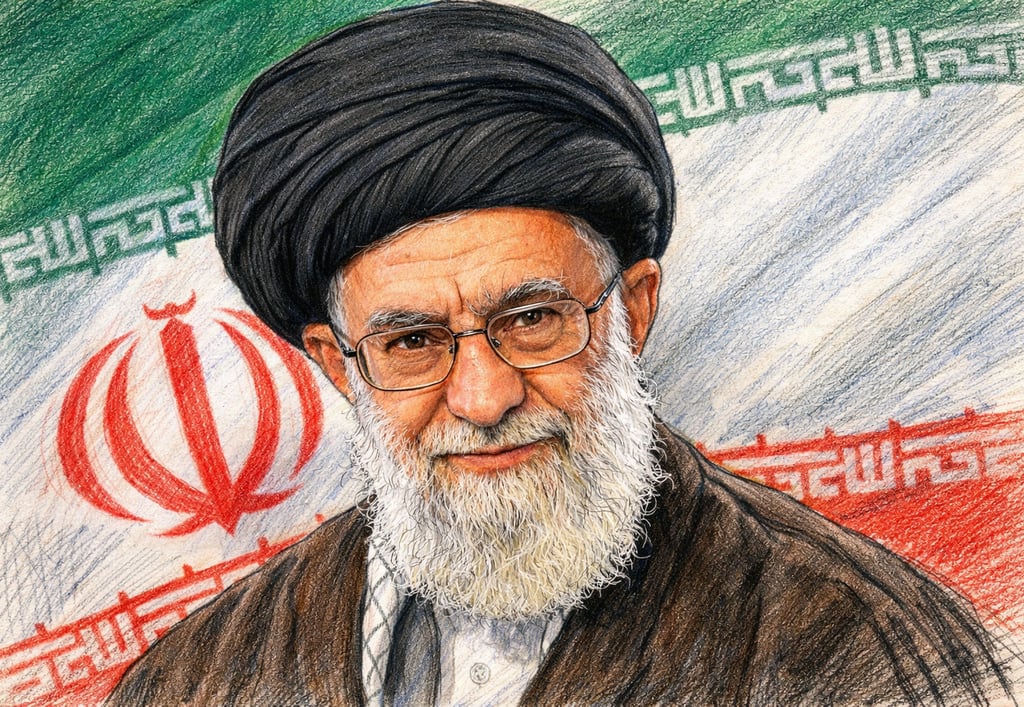

Iran Leadership Crisis Deepens as Middle East Conflict Widens
The Middle East is facing one of its most volatile moments in decades as the war between Iran and Israel intensifies and begins to spill across the region. At the same time, Iran is navigating a historic political transition after the death of its long-time supreme leader, Ayatollah Ali Khamenei.
According to emerging reports from Iranian political and clerical circles, Tehran has moved close to selecting a new supreme leader. Strong indications suggest that Mojtaba Khamenei, the son of the late leader, could soon be formally announced as his successor.
The leadership decision is unfolding amid heavy Israeli airstrikes on strategic infrastructure inside Iran, including fuel storage facilities in the capital Tehran. With the conflict now entering its ninth day, regional tensions are escalating rapidly and drawing in several Gulf states.
Ayatollah Ali Khamenei was reportedly killed earlier in the conflict during large-scale U.S. and Israeli military operations targeting Iranian command and strategic sites. His death created an immediate power vacuum at the highest level of Iran’s political system.
Under Iran’s constitution, the country’s supreme leader is chosen by a powerful clerical body known as the Assembly of Experts. Senior religious figures have been meeting behind closed doors since Khamenei’s death to determine who will lead the Islamic Republic during a time of war.
Sources close to Iran’s political establishment say the selection process is nearing completion. Mojtaba Khamenei has emerged as the strongest candidate due to his influence within Iran’s security institutions and religious networks. Over the past decade, he has quietly built connections with the Revolutionary Guard and key conservative factions inside the country.
If Mojtaba Khamenei ultimately becomes supreme leader, analysts say it would signal continuity in Iran’s power structure rather than a shift in direction. The hardline political camp that dominated under his father would likely remain firmly in control, particularly regarding Iran’s stance toward Israel and the United States.
While Tehran debates its political future, Israel has continued expanding its military campaign inside Iran. Overnight airstrikes targeted major fuel storage facilities on the outskirts of Tehran, sending large flames and thick black smoke into the sky.
Residents reported that explosions lit up the night across parts of the capital. Israeli military officials later confirmed that the facilities were believed to supply fuel and propellant linked to Iran’s ballistic missile program.
Israeli authorities described the sites as legitimate military targets connected to Iran’s war infrastructure. Iranian officials strongly rejected that claim, accusing Israel of committing war crimes by targeting facilities that could expose civilians to toxic fumes and environmental hazards.
The conflict has also begun spreading beyond Iran and Israel. Over the weekend, Iranian drone and missile attacks were reported across several Gulf countries, marking a dangerous new phase in the confrontation.
The United Arab Emirates said its air defense systems intercepted 113 drones and 16 ballistic missiles launched toward its territory in a single day. Despite the interceptions, several drones managed to reach the country, killing at least four migrant workers.
In Kuwait, a large fire engulfed a government building after a suspected drone strike, killing two security officers. Bahrain also confirmed that one of its desalination plants suffered material damage following an Iranian drone attack, although authorities said water supplies were not disrupted.
Saudi Arabia reported casualties as well. A projectile strike in the city of Al-Kharj killed two civilians and injured twelve others, raising fears that energy infrastructure and urban areas across the Gulf could increasingly become targets.
The regional conflict has widened further with the involvement of Hezbollah, the Iran-backed militant group based in Lebanon. Hezbollah has launched rockets and drones toward Israel in support of Iran.
In response, Israel carried out airstrikes in Beirut, including an attack on a hotel in the central district of the Lebanese capital. Israeli officials said the strike targeted Iranian commanders operating inside the city. At least four people were reported killed in the attack.
Meanwhile, Israeli bombardment in southern Lebanon has intensified. Lebanese health authorities say nearly 400 people have been killed across the country over the past week as fighting escalates.
The humanitarian toll of the broader conflict continues to grow. Iran’s ambassador to the United Nations said U.S. and Israeli attacks have killed at least 1,332 Iranian civilians and wounded thousands more.
On the Israeli side, Iranian missile and drone strikes have killed at least ten people. The conflict has also taken a toll on U.S. forces in the region, with at least six American service members reported killed in attacks on military positions.
Amid the escalating violence, U.S. President Donald Trump has made a controversial statement suggesting Washington should have influence over the selection of Iran’s next supreme leader.
Trump said the United States should have a say in the leadership transition in Tehran and warned that any new Iranian leader who lacks American approval may struggle to remain in power.
He also indicated that negotiations to end the war are not currently being pursued, signaling that the military confrontation could continue for some time.
Analysts say the combination of a leadership transition in Iran and an expanding regional war has created an extremely fragile situation. If Mojtaba Khamenei is officially appointed supreme leader, the move could consolidate internal power but may also deepen confrontation with Israel and the United States.
With Gulf states already drawn into the conflict and Lebanon turning into another battleground, fears are growing that the war could escalate into a much broader regional crisis.
Such an outcome would not only reshape Middle Eastern geopolitics but could also disrupt global energy markets, international trade routes, and security stability far beyond the region.
Stay informed with the latest national and international news.
© 2026. All rights reserved.