
Long Lines at Food Pantries Show Inflation Is Testing Trump’s Base in Michigan
Long food pantry lines in Michigan reveal how inflation is squeezing households, testing Trump’s core supporters as living costs remain high.
Raja Awais Ali
12/21/20252 min read
Long Lines at Food Pantries Show Inflation Is Testing Trump’s Base in Michigan
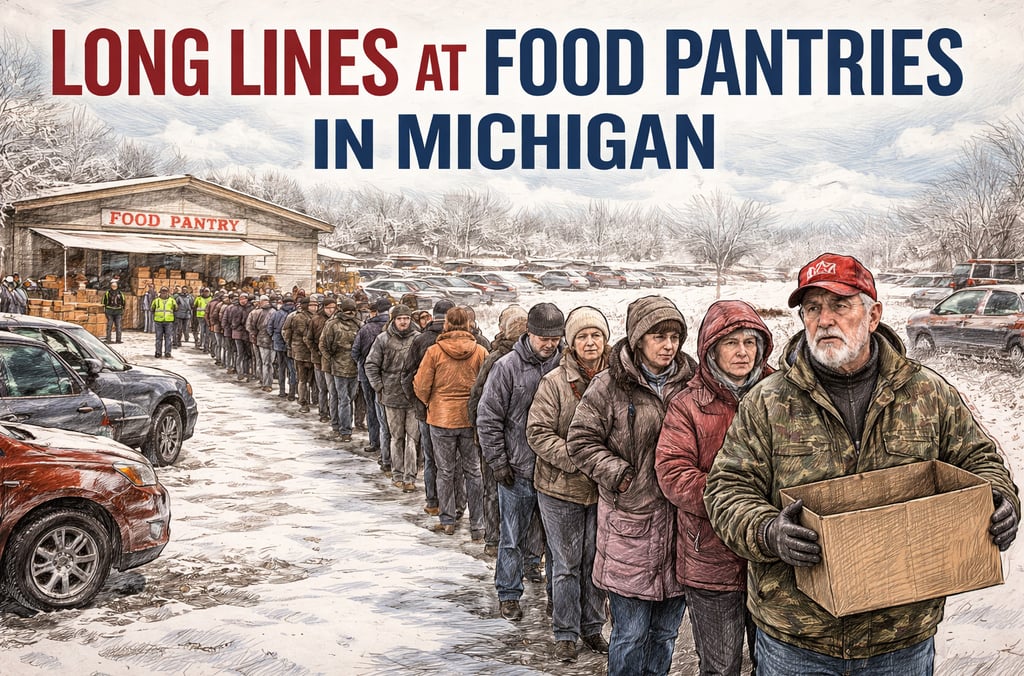
Long lines outside food pantries across Michigan are becoming a visible sign of how persistent inflation is straining household budgets, even among communities that strongly supported President Donald Trump. On 21 December 2025, residents in several rural and working-class areas queued for hours in freezing temperatures to receive basic groceries, highlighting the growing pressure of high food and living costs.
In counties such as St. Clair and other parts of eastern Michigan, food distribution centers reported a sharp rise in demand ahead of the holiday season. Volunteers described parking lots filled with cars stretching for blocks, as families waited patiently for boxes containing essentials such as vegetables, fruit, dairy products, and canned goods. Many of those seeking assistance said they had never relied on food pantries before.
Although overall U.S. inflation has eased compared with its peak, the cost of food, fuel, and housing remains stubbornly high. In Michigan, where manufacturing and blue-collar jobs dominate, wage growth has struggled to keep pace with everyday expenses. Residents say grocery bills remain significantly higher than just a few years ago, forcing difficult choices between food, heating, and medical costs during the winter months.
The situation is politically sensitive because many of the affected communities form part of Donald Trump’s core voter base. Several residents interviewed by local media said they had supported Trump in previous elections, believing his economic policies would reduce prices and strengthen purchasing power. While some continue to back him, others expressed frustration that daily costs remain elevated despite political promises.
Food banks across the state say the surge in demand is also linked to reduced or delayed access to federal assistance programs, including nutrition benefits. Charitable organizations report that donations have not kept pace with rising need, putting additional strain on their ability to serve growing crowds. Volunteers say they are doing everything possible, but resources are stretched thin.
Political analysts note that economic pressure at the local level often shapes voter sentiment more strongly than national indicators. While inflation statistics may suggest improvement, the lived experience of families standing in line for food tells a different story. The gap between official data and household reality could influence political attitudes as the United States moves closer to the next election cycle.
Local officials and community leaders are calling for targeted relief to help working families manage food and energy costs. They warn that without additional support, food insecurity could worsen, particularly in rural and industrial regions already facing economic uncertainty.
As winter deepens, the long lines at Michigan food pantries stand as a stark reminder that inflation remains a powerful force in American life. For many voters who once believed economic relief was on the horizon, the daily struggle to afford basic necessities is now testing political loyalty, patience, and trust in leadership.
Stay informed with the latest national and international news.
© 2026. All rights reserved.