
Historic India-EU Trade Breakthrough: European Car Import Taxes May Drop to 40%
India and EU move closer to a historic trade deal, cutting European car import taxes to 40%, boosting consumer choice and bilateral trade.
Raja Awais Ali
1/25/20262 min read
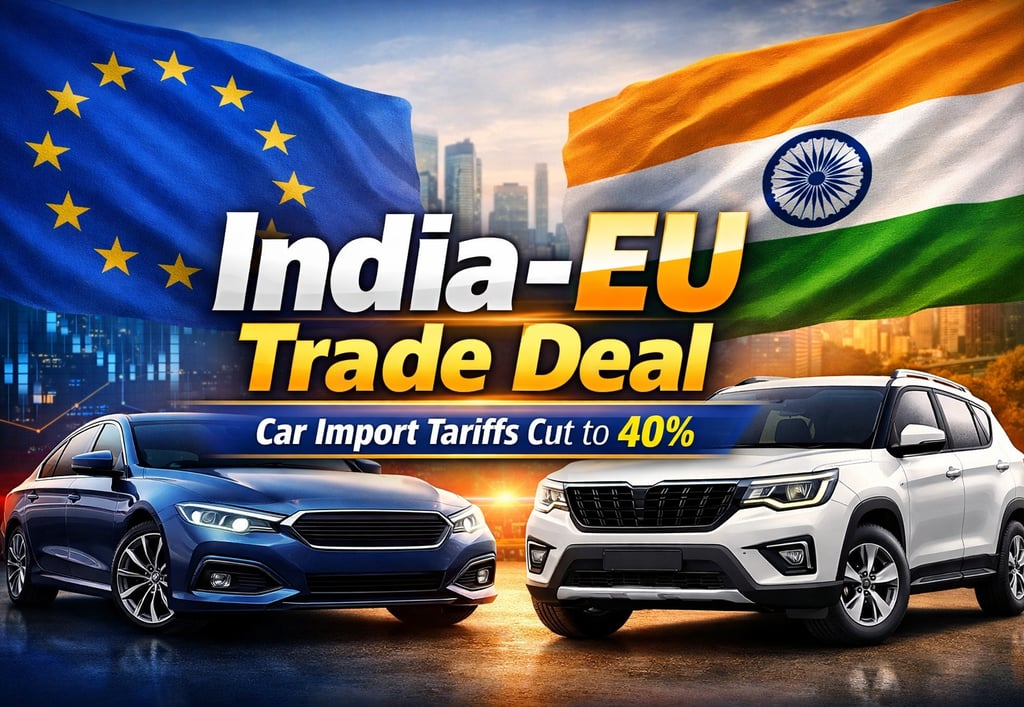
Historic Trade Breakthrough: India Prepares to Slash Import Taxes on European Cars to 40%
On 25 January 2026, credible sources reported a significant and historic trade development between India and the European Union (EU), as both sides move closer to a major trade agreement. Under the proposed deal, India is considering reducing import taxes on European cars from the current peak of 110% to 40%, a move that could bring a substantial transformation to the Indian automotive market.
This development comes after years of negotiations for a free trade agreement between India and the EU. Despite several disagreements on key issues during these talks, economic interests have now taken precedence over political and trade barriers. The EU is home to some of the world’s largest and most advanced automobile industries, while India is a rapidly growing car market, driven by population growth, urbanization, and the expanding middle class.
Currently, high import duties on European cars make them significantly more expensive in India, limiting the scale of sales for European car manufacturers. With the proposed 40% tariff, European automakers are expected to lower prices considerably, offering Indian consumers greater choice, improved quality, and easier access to global brands.
Trade experts believe that this decision could benefit not just the EU but also the Indian economy. Estimates suggest that this free trade agreement could increase bilateral trade between India and the EU by at least $50 billion in the coming years. Additionally, Indian exports in textiles, electronics, pharmaceuticals, chemicals, and IT products are expected to gain wider and improved access to European markets.
However, India’s domestic automotive industry has responded cautiously. Local manufacturers warn that a sudden and steep reduction in tariffs could expose them to intense global competition. To address this, the agreement is considering phased reductions, specific import quotas, and safeguard clauses, allowing domestic companies sufficient time to adjust to the new market conditions.
The deal is particularly significant for the electric vehicle (EV) sector. Reports indicate that import duties on luxury and advanced EVs could be reduced further to 10–15%. This move is expected to support India’s green transportation initiatives, facilitate the transfer of advanced technologies, and contribute to national carbon reduction targets.
Politically and diplomatically, the agreement is viewed as a major success. Both the Indian government and EU leadership recognize that in the context of a shifting global economy, geopolitical developments, and challenges in global supply chains, close economic cooperation has become a timely necessity. The agreement is expected to strengthen trade relations while also enhancing the strategic partnership between India and the EU.
Experts say that if finalized, the agreement could mark the beginning of a new era in India’s trade policy, promoting open markets, increased foreign investment, and access to world-class products. Overall, the proposed reduction in import tariffs on cars represents a long-term, mutually beneficial, and economically stabilizing development for both India and the European Union.
Stay informed with the latest national and international news.
© 2026. All rights reserved.