
Hormuz Strait Crisis 2026: US Strikes Iranian Radar Sites as Gulf Tensions Push Oil Prices Higher
The 2026 Hormuz Strait crisis intensifies after U.S. strikes on Iranian radar sites and Iran launches drones and missiles across the Gulf. Full analysis of rising oil prices, regional tensions, Lebanon conflict, and global economic risks.
Raja Awais Ali
6/6/20265 min read
Hormuz Strait Crisis Deepens as US and Iran Escalate Gulf Conflict and Oil Prices Surge
June 6, 2026, marked another dangerous turning point in the Middle East as tensions between the United States and Iran expanded across the Gulf region, threatening global energy supplies, maritime security, and economic stability. What initially began as military exchanges has now evolved into a wider regional crisis involving the Strait of Hormuz, Gulf nations, Israel, Lebanon, and global oil markets.
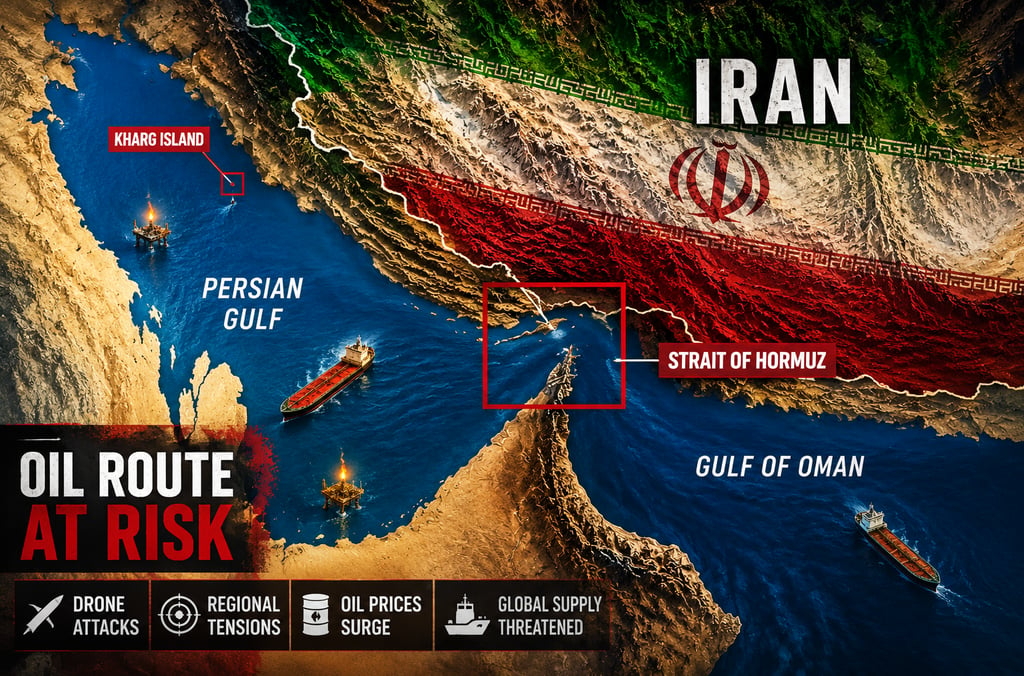
The latest escalation began after U.S. forces intercepted four Iranian drones flying toward the Strait of Hormuz. According to American military officials, the drones were believed to be targeting maritime traffic moving through the region. Shortly afterward, the United States launched strikes on Iranian coastal radar and surveillance facilities located in Goruk and Qeshm Island, two highly strategic locations overlooking the Strait of Hormuz.
The Strait of Hormuz remains one of the world’s most critical energy routes. Before the conflict intensified, nearly 20 percent of global oil shipments passed through this narrow waterway. Any disruption in the area immediately impacts oil prices, shipping costs, and international trade routes. Over the past several weeks, Iran has significantly tightened its control around the strait, creating fears of a prolonged energy crisis.
Iran’s Revolutionary Guard later announced retaliatory operations targeting U.S. military bases in Kuwait and Bahrain. Iranian officials claimed ballistic missiles were launched toward American positions in both Gulf countries in response to recent U.S. strikes. Kuwait’s air defense systems reportedly intercepted several incoming missiles and drones, while emergency sirens sounded across Bahrain as authorities advised residents to seek shelter.
Although no major casualties were immediately reported, Gulf governments strongly condemned the attacks. Kuwait described the strikes as a direct threat to regional stability and civilian safety, warning that the conflict was rapidly expanding beyond traditional military boundaries.
The U.S. military stated that six Iranian missiles were intercepted before reaching their targets, while a seventh missile failed mid-flight. Despite the interceptions, the incident highlighted the growing risk of direct confrontation across the Gulf region.
Iran also claimed responsibility for targeting four oil tankers attempting to cross the Strait of Hormuz without authorization. The incident increased concerns within the international shipping industry, with several commercial operators reviewing routes and security measures across Gulf waters. Maritime insurance costs have already started rising due to fears of further attacks on commercial vessels.
At the same time, indirect negotiations between Washington and Tehran continue behind closed doors in an effort to secure a temporary ceasefire after nearly three months of conflict. However, repeated military flare-ups and growing political demands on both sides have complicated diplomatic progress.
Iran is reportedly seeking access to billions of dollars in frozen oil revenues, sanctions relief on crude exports, and an end to restrictions affecting its ports and maritime trade. Tehran also wants broader recognition of its influence over the Strait of Hormuz as part of any future agreement.
A major diplomatic development also emerged after reports indicated that Pakistan’s Interior Minister Mohsin Naqvi was traveling to Tehran as part of mediation efforts aimed at reducing regional tensions. Although Pakistani authorities did not immediately confirm the visit, the development signaled increasing regional concern over the possibility of a wider Middle East conflict.
Meanwhile, U.S. President Donald Trump is facing mounting domestic pressure due to rising fuel prices and growing public frustration over the war. During an interview with NBC’s “Meet the Press,” Trump stated that most of Iran’s missile and drone manufacturing capabilities had been destroyed during earlier strikes.
According to Trump, Iran now possesses only around 21 to 22 percent of its original missile stockpile. However, he acknowledged that Tehran still maintains significant military capabilities and remains resistant to political pressure.
Trump described Iran as “strong and proud,” adding that Iranian leadership was being forced into decisions it had previously refused to consider. His remarks reflected growing concern in Washington that despite extensive military operations, Iran still retains the ability to disrupt the region through missiles, drones, and allied armed groups.
Iranian officials also continued issuing warnings. Mohsen Rezaei, an adviser to Iran’s supreme leader, warned that the United States would enter a “dark corridor” if it resumed major attacks. He also said that any serious peace agreement would require the release of approximately $24 billion in frozen Iranian assets.
The conflict is now having severe consequences for global energy markets. As of June 6, 2026, Brent crude oil prices climbed to approximately $94 to $96 per barrel, while U.S. West Texas Intermediate crude traded between $91 and $93 per barrel. Oil prices have surged sharply in recent days as fears grow over disruptions to Gulf supply routes.
Energy analysts warn that if tensions around the Strait of Hormuz continue escalating, crude oil prices could soon cross the $100 per barrel mark. Global gasoline, diesel, and liquefied natural gas prices are also rising, placing additional pressure on transportation networks and consumer economies worldwide.
Shipping and insurance costs throughout the Gulf region have increased significantly as companies attempt to avoid high-risk maritime zones. The United Nations World Food Programme also warned that rising fuel and transportation costs could push millions of vulnerable people closer to hunger and economic hardship.
The United States has reportedly considered releasing additional oil reserves from its Strategic Petroleum Reserve to stabilize global supply and calm energy markets. However, analysts believe temporary reserves may not be enough if the conflict continues expanding.
Alongside Gulf tensions, fighting in Lebanon has also intensified again. Hezbollah announced two new attacks against Israeli forces in southern Lebanon, while Lebanese security sources reported Israeli airstrikes hitting multiple towns across the south.
Iran has publicly reaffirmed support for Hezbollah and made Israeli withdrawal from Lebanon a central condition for any broader ceasefire agreement. Tehran has effectively linked regional diplomacy with developments on the Lebanon front.
Hezbollah leader Naim Qassem rejected a U.S.-brokered agreement between Israel and the Lebanese government, arguing that the deal failed to guarantee Israeli withdrawal from Lebanese territory. He also stated that Hezbollah had not participated directly in those negotiations.
Israel, however, has maintained that its military operations in Lebanon will continue and that Israeli forces will not withdraw under current conditions. The disagreement has increased friction not only within the region but also between Israel and the United States, as Washington continues pushing for a broader regional ceasefire while Israeli leadership insists on continuing military operations against Hezbollah.
The June 6 escalation demonstrates how rapidly the Middle East conflict is evolving into a broader geopolitical and economic crisis. What began as military exchanges between the United States and Iran now threatens global energy markets, maritime trade, regional diplomacy, and economic stability far beyond the Gulf.
With tensions rising across the Strait of Hormuz, Lebanon, Israel, Bahrain, Kuwait, and surrounding Gulf waters, world leaders are increasingly concerned that even a small miscalculation could trigger a much larger regional conflict. Unless diplomatic progress is achieved soon, oil prices, inflation, global trade disruptions, and political instability may continue worsening in the weeks ahead.
Stay informed with the latest national and international news.
© 2026. All rights reserved.