
Gaza Atrocities 2026: UN Report Exposes Israel & Hamas War Crimes
The UN report on February 19, 2026, reveals severe atrocities in Gaza by Israel and Hamas. Read the full analysis, verified facts, and latest humanitarian data.
Raja Awais Ali
2/19/20262 min read
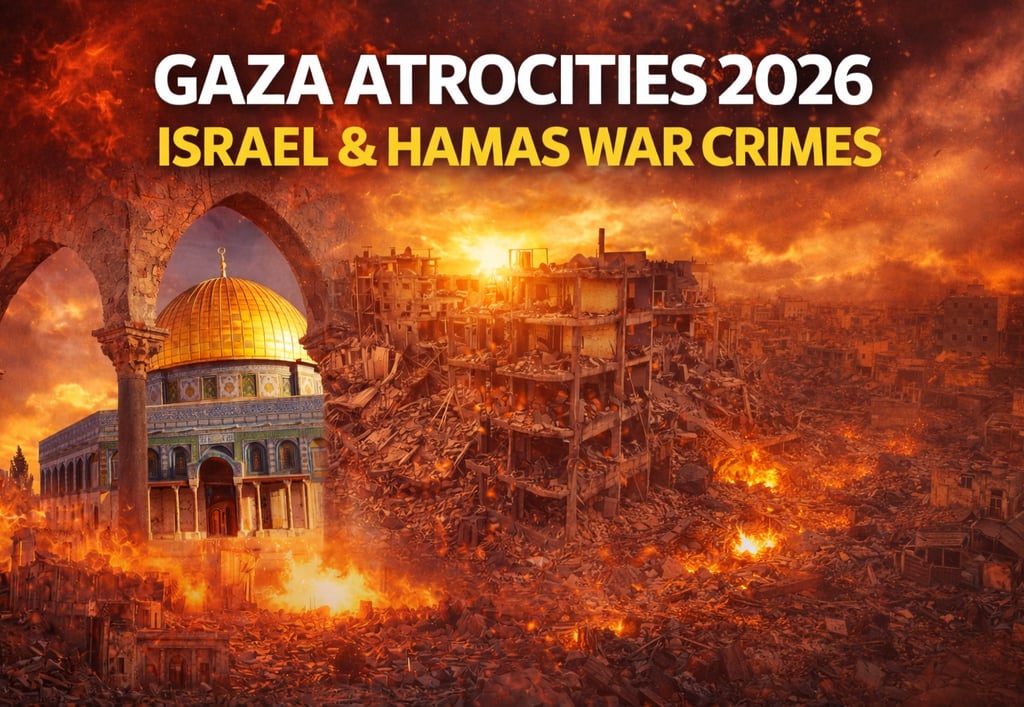
Atrocities in Gaza: UN Report Accuses Israel and Hamas
On February 19, 2026, the United Nations Office of Human Rights released a detailed report stating that Israeli forces committed severe human rights violations and atrocity crimes in Gaza, while Hamas and other Palestinian groups were also responsible for certain war crimes. Covering the period from November 2024 to October 2025, the 17-page report provides a comprehensive analysis of the conflict, its humanitarian impact, and violations of international law.
According to the report, Israeli military operations caused massive damage to human life, property, and essential infrastructure, making survival extremely difficult for ordinary Palestinians. The UN highlighted that forced displacement and the destruction of homes in Gaza raised serious concerns of ethnic cleansing, putting residents’ basic rights at risk. The report emphasized that attacks on civilian areas, schools, and hospitals violated the principles of proportionality and distinction under international humanitarian law.
Food insecurity and famine were also significant issues. According to the Global Hunger Monitor, several regions in Gaza experienced severe food shortages in 2025, directly linked to Israeli military actions and blockades. Distribution networks for humanitarian aid, operated with international support, failed to deliver adequate assistance. Essential utilities such as water, electricity, and healthcare services were disrupted for long periods, leaving hospitals understaffed and communities struggling to survive. The UN report explicitly noted that these conditions could have long-term effects on public health, childhood development, and overall social stability.
The report also detailed actions by Hamas, including the detention and mistreatment of hostages, which may constitute war crimes. Rocket attacks by Hamas targeted civilian areas in Israel, increasing the risk of indiscriminate harm. The UN emphasized that violence against civilians, whether by state or non-state actors, is prohibited under international law, and both parties must be held accountable.
Humanitarian statistics highlight the scale of the crisis. In the first 16 months of the conflict, over 75,000 people were killed in Gaza, with 56% of the casualties being women, children, and elderly civilians. Approximately 8,200 deaths were caused by famine and disease, while over 60% of residential buildings were either partially or fully destroyed, leaving roughly 1.3 million people displaced. These figures are supported by independent research from The Lancet, which confirmed that previous casualty reports significantly underestimated the human toll of the conflict.
The UN report also spurred international reactions. Global leaders and human rights organizations condemned the atrocities and called for urgent humanitarian assistance and protection of civilians. The international community urged Israel to comply with international humanitarian law, while Hamas was called upon to cease attacks targeting civilians. Israel rejected the report’s findings, claiming that its operations were necessary to protect its citizens from ongoing threats.
This report is historically significant as it is the first UN-affiliated investigation to acknowledge crimes committed by both sides clearly. Experts, legal scholars, and human rights organizations are now preparing evidence for potential investigations in the International Court of Justice, emphasizing accountability, justice, and long-term resolution. The report stressed that immediate humanitarian aid, strict adherence to ceasefire agreements, and international oversight are essential to prevent further civilian suffering.
The Gaza crisis is no longer merely a political or security issue; it has become a fundamental question of human rights, life preservation, and global justice. Without urgent intervention, humanitarian conditions may deteriorate further, leaving civilians exposed to continued violence, deprivation, and long-term societal collapse.
Stay informed with the latest national and international news.
© 2026. All rights reserved.