
European Union Approves €90 Billion Loan for Ukraine, Rejects Use of Frozen Russian Assets
EU approves a €90 billion loan for Ukraine but fails to agree on using frozen Russian assets, highlighting legal, financial, and political divisions.
Raja Awais Ali
12/19/20252 min read
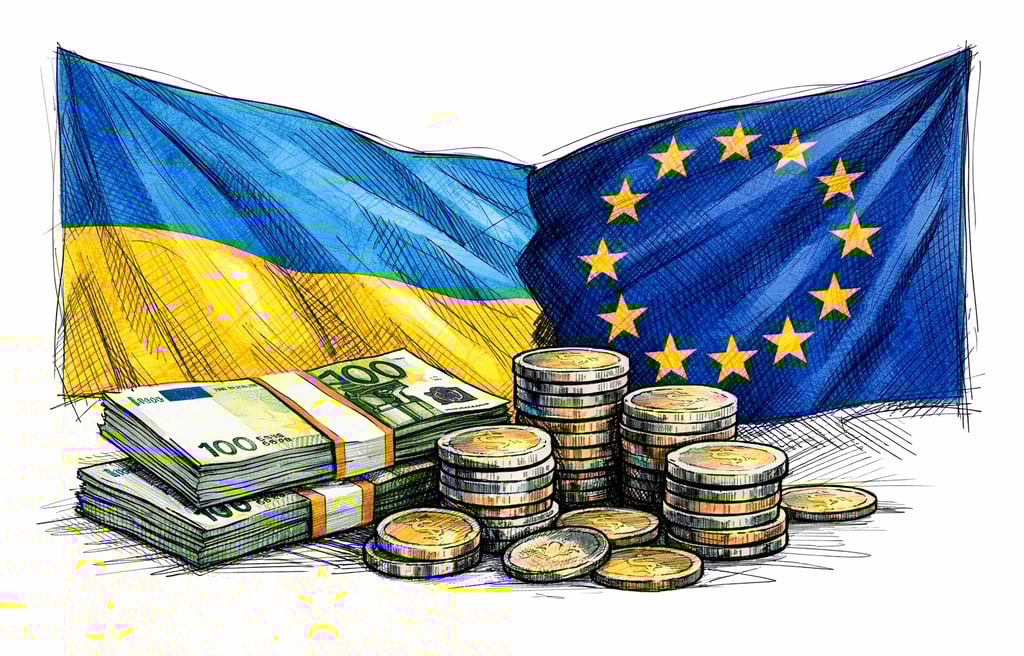
European Union Approves €90 Billion Loan for Ukraine but Fails to Agree on Using Frozen Russian Assets
Brussels, December 19, 2025 — The European Union has approved a major €90 billion financial assistance loan for Ukraine to support its economy and defense as Russia’s war enters its fourth year. While EU leaders reached consensus on providing the loan, they failed to agree on a controversial proposal to use frozen Russian state assets to finance the aid.
The decision was finalized after intense negotiations during a European Council meeting in Brussels. The loan package will be distributed over 2026–2027 and is intended to help Ukraine cover budget shortfalls, maintain public services, and fund defense spending amid continued Russian attacks.
European Council President António Costa said the agreement sends a strong signal of long-term commitment to Kyiv, stressing that the European Union will stand by Ukraine “for as long as it takes.” The funds will be raised through joint EU borrowing backed by the bloc’s common budget, ensuring predictable and stable financing.
Why the Russian Assets Plan Failed
Despite broad support for helping Ukraine, EU leaders could not reach unanimity on using frozen Russian central bank assets, estimated at around €210 billion, most of which are held at Belgium-based financial institutions such as Euroclear.
Belgium, supported by countries including Hungary and Slovakia, raised serious legal and financial objections. Belgian officials warned that using or confiscating the assets could expose the country and its financial institutions to costly international lawsuits and potential retaliatory measures from Russia. Legal experts also cautioned that outright confiscation could violate international law and undermine confidence in the eurozone financial system.
As a result, the EU opted for a lower-risk approach, issuing loans backed by member-state guarantees rather than relying on seized Russian funds. Some countries were granted opt-out clauses, allowing them to avoid direct financial liability while still politically supporting the package.
Ukraine’s Reaction and Broader Impact
Ukrainian President Volodymyr Zelenskyy welcomed the €90 billion loan, calling it a vital step toward economic stability and continued resistance against Russian aggression. However, Kyiv reiterated its long-held position that Russian assets should ultimately be used to compensate Ukraine for war damage and reconstruction costs.
European Commission President Ursula von der Leyen acknowledged the sensitivity of the issue, saying the EU remains committed to exploring lawful mechanisms to make Russia pay for the destruction caused by the war, while emphasizing that legal certainty must come first.
Conclusion
The €90 billion loan represents one of the largest financial commitments the European Union has ever made to a non-member state, underlining Europe’s strategic interest in Ukraine’s survival. However, the failure to agree on using frozen Russian assets highlights ongoing divisions within the EU over legal risk, financial responsibility, and long-term strategy.
As the war continues, pressure is expected to grow on European leaders to develop stronger mechanisms to hold Russia financially accountable, while ensuring Ukraine receives sustained and predictable support.
Stay informed with the latest national and international news.
© 2026. All rights reserved.