
Dollar, Bonds or Gold? Investors Search for the Safest Haven as Global Tensions Rise (March 2026)
Global investors are rushing to safe-haven assets as Middle East tensions shake markets. Is the U.S. dollar, government bonds, or gold the safest investment in 2026? A detailed market analysis.
Raja Awais Ali
3/5/20264 min read
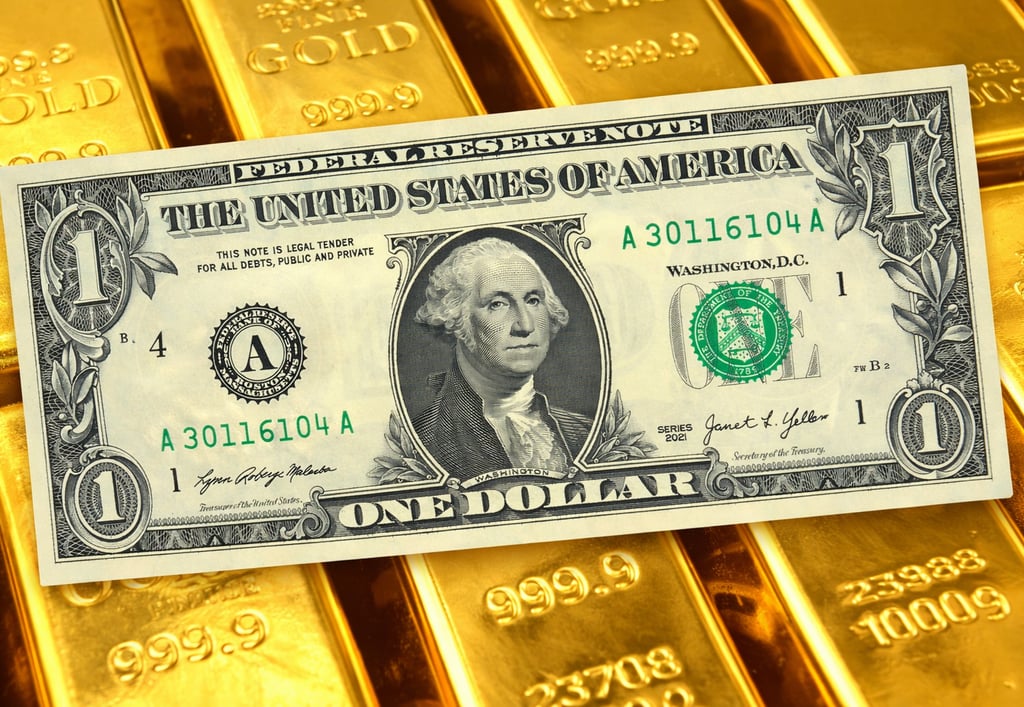
Dollar, Bonds or Gold? Which Asset Is the Safest Haven During the 2026 Global Market Turmoil
Rising tensions in the Middle East and growing uncertainty across global financial markets have once again pushed investors toward so-called “safe-haven” assets. During periods of geopolitical instability, war, or economic stress, investors typically move their money into assets that are considered more stable and capable of preserving value.
Historically, the U.S. dollar, government bonds, gold, the Japanese yen, and the Swiss franc have been viewed as reliable refuges during market turmoil. However, developments in early March 2026 suggest the picture is becoming more complex. Some traditional safe havens are performing unexpectedly well, while others are struggling to maintain their reputation.
This evolving market dynamic has reignited debate among financial analysts about which asset truly offers the strongest protection during the current geopolitical crisis.
U.S. Dollar Strengthens as Investors Seek Liquidity
One of the strongest performers during the latest market turbulence has been the U.S. dollar. The dollar index, which measures the American currency against six major global currencies, has risen by roughly 1.5 percent this week.
Notably, the dollar has strengthened even against two currencies traditionally viewed as safe havens — the Japanese yen and the Swiss franc. During most global crises, investors usually shift funds toward these currencies. This time, however, the dollar appears to be benefiting from structural advantages in the global economy.
One key factor supporting the U.S. currency is America’s position as a major energy exporter. As geopolitical tensions push oil prices higher — with Brent crude moving above $80 per barrel — the U.S. economy may benefit from increased energy exports.
In addition, investors facing volatility often seek immediate access to cash, and the U.S. dollar remains the world’s dominant reserve currency. As a result, demand for short-term dollar liquidity has increased significantly.
Nevertheless, some analysts caution that the dollar’s safe-haven status may not be guaranteed in every scenario. Rising U.S. debt levels and political uncertainty could weaken long-term investor confidence in the currency.
Government Bonds Lose Some Safe-Haven Appeal
Government bonds have traditionally played a central role in defensive investment strategies. In past crises, investors often rushed to buy sovereign bonds, driving yields lower as demand increased.
However, the pattern during the current market shock appears different.
Yields on Germany’s benchmark 10-year Bund — a key reference point for European government debt — have risen by about 14 basis points this week. Rising yields generally indicate that investors are selling bonds rather than buying them.
Several factors explain this shift. Inflation concerns remain elevated in many advanced economies, and investors are increasingly focused on the long-term fiscal outlook for governments.
Many European countries are expected to increase borrowing in the coming years, raising concerns about debt sustainability. As a result, bonds are now being evaluated more in terms of inflation and interest-rate expectations rather than purely as safe-haven assets.
Gold Maintains Its Long-Term Safe-Haven Reputation
Despite volatility in recent trading sessions, gold continues to maintain a strong reputation as a reliable store of value during periods of global uncertainty.
Over the past decade, the price of gold has surged by approximately 240 percent, underscoring its enduring appeal as a hedge against economic and geopolitical risks.
Gold is currently trading above $5,000 per ounce, and some market strategists believe the metal could potentially reach $6,000 during 2026 if geopolitical tensions and inflationary pressures persist.
A brief drop in gold prices earlier in the week was partly attributed to investors selling profitable assets in order to offset losses elsewhere in financial markets. However, analysts stress that this temporary volatility does not undermine gold’s broader role as a defensive investment.
Interestingly, gold still represents a relatively small portion of global investment portfolios. Exchange-traded funds holding gold account for less than 1 percent of total global fund assets. Many strategists believe a strategic allocation of 5 to 10 percent would be more typical during periods of elevated uncertainty.
This suggests there may still be considerable room for additional investment demand in gold in the future.
Traditional Safe-Haven Currencies Face New Challenges
Two of the world’s most traditional currency refuges — the Japanese yen and the Swiss franc — have struggled during the latest market turbulence.
The Swiss franc has declined roughly 1.2 percent against the U.S. dollar this week, while the Japanese yen has weakened by about 0.8 percent.
In Japan, political uncertainty and debate surrounding future interest-rate policy have weighed on investor sentiment. Reports suggesting hesitation among policymakers regarding further rate hikes have created additional uncertainty about the yen’s outlook.
Meanwhile, the Swiss National Bank has signaled that it could intervene in currency markets if the franc strengthens excessively. The possibility of such intervention may be limiting investor enthusiasm for the currency.
Defensive Stocks Also Fail to Provide Protection
Another notable aspect of the current market environment is the relatively weak performance of traditionally defensive equity sectors.
Utilities and consumer staples — sectors typically considered resilient during economic downturns — have failed to outperform broader markets.
In the United States, utility stocks have declined about 1 percent this week, while consumer staples have fallen approximately 2.8 percent. The broader S&P 500 index has remained largely flat during the same period.
European markets show a similar trend, with utility stocks down roughly 3 percent and consumer staples declining about 4.5 percent.
Analysts suggest that one reason for this underperformance is that investors had already heavily allocated funds to these sectors before the latest geopolitical tensions intensified.
Expert Conclusion: Gold Remains the Strongest Long-Term Haven
Financial analysts generally agree that no single asset can offer complete protection during periods of global instability. However, current market movements in March 2026 suggest that gold continues to stand out as the most reliable long-term safe-haven asset.
Gold’s performance during geopolitical crises, combined with persistent inflation risks and rising global debt levels, reinforces its role as a hedge against economic uncertainty.
At the same time, the U.S. dollar remains the dominant short-term refuge due to its status as the world’s primary reserve currency and the strong demand for dollar liquidity during market stress.
Government bonds are facing new challenges as inflation pressures and rising fiscal deficits reshape the traditional safe-haven landscape. Meanwhile, currency refuges such as the Japanese yen and Swiss franc are becoming less predictable due to domestic policy uncertainties.
For investors, the lesson from the current market turmoil is clear: diversification remains the most effective strategy for managing risk.
Rather than relying on a single safe-haven asset, financial experts increasingly recommend maintaining a balanced portfolio that includes a mix of gold, currencies, and other defensive investments.
In an increasingly volatile global economy shaped by geopolitical tensions, inflation pressures, and shifting monetary policies, spreading investments across multiple asset classes may ultimately provide the strongest protection for long-term wealth.
Stay informed with the latest national and international news.
© 2026. All rights reserved.