
China Military Buildup 2026: Pentagon Warns Asia, Calls for Higher Defense Spending and Stronger Alliances
U.S. Defense Secretary Pete Hegseth warns of China’s growing military power at Shangri-La Dialogue 2026. Explore the implications for Asia, Taiwan, defense spending, U.S. alliances, and regional security.
Raja Awais Ali
5/30/20265 min read
China Military Buildup 2026: Pentagon Warns Asia, Calls for Higher Defense Spending and Stronger Alliances
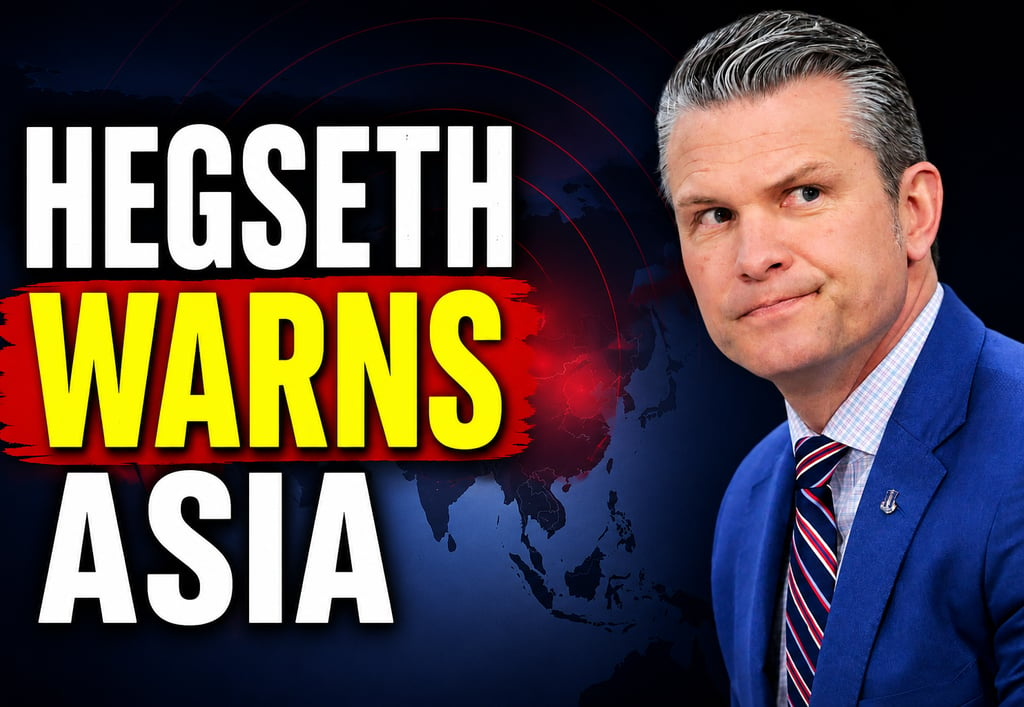
The growing military power of China has once again become a major topic of discussion in global security circles. Speaking at the Shangri-La Dialogue 2026 in Singapore, U.S. Defense Secretary Pete Hegseth delivered one of Washington’s strongest warnings yet about Beijing’s rapidly expanding military capabilities. His message was clear: Asian allies must increase their defense spending, strengthen regional partnerships, and prepare for a future in which China’s influence could reshape the balance of power across the Indo-Pacific.
The Shangri-La Dialogue is widely regarded as Asia’s most important annual security forum, bringing together defense ministers, military leaders, policymakers, and security experts from around the world. During his address, Hegseth argued that China’s military expansion has reached a scale that is causing growing concern among countries across the region. He described Beijing’s buildup as historic and warned that its expanding military activities extend well beyond China’s borders.
According to Hegseth, a Pacific region dominated by any single power would undermine regional stability and weaken the security framework that has supported economic growth and peace for decades. He stressed that no country, including China, should be allowed to establish regional hegemony or place the security and prosperity of neighboring nations at risk. His remarks reflected increasing concern within Washington that Beijing’s military modernization efforts could alter strategic dynamics throughout Asia.
One of the most significant announcements from the speech was the expectation that U.S. allies and partners in Asia should increase defense spending to approximately 3.5 percent of their gross domestic product (GDP). The Pentagon chief linked this expectation to America’s own military investments, noting that the United States plans to invest around $1.5 trillion in strengthening its armed forces. He argued that maintaining peace requires credible military capabilities and that regional partners must contribute more actively to collective security.
Hegseth used a memorable phrase to emphasize his point, saying the region needs “less Shangri-La and more ships, more submarines.” His comments highlighted a growing belief within Washington that security conferences and diplomatic discussions alone are not enough to address emerging military challenges. Instead, he argued that stronger defense capabilities and greater preparedness are essential for preserving stability in the Indo-Pacific.
At the same time, Hegseth emphasized that the United States is not seeking confrontation or escalation. According to him, America’s objective is deterrence through strength. He stated that regional allies are looking for stability, predictable leadership, and a security environment that discourages aggression. He described U.S. policy as one based on disciplined strength, steady resolve, and confident leadership capable of maintaining peace without provoking unnecessary conflict.
The Pentagon chief also reinforced President Donald Trump’s long-standing position that wealthy allies should shoulder a greater share of their own defense responsibilities. Echoing a message frequently directed at NATO members and other security partners, Hegseth declared that the era of the United States subsidizing the defense of wealthy nations is over. He argued that successful alliances require meaningful contributions from all members and insisted that there should be no “freeloading” within America’s security partnerships.
During his speech, Hegseth praised several U.S. allies and partners in Asia, including South Korea, Japan, the Philippines, Australia, Singapore, Malaysia, and Thailand. He specifically highlighted Japan’s efforts to strengthen its military capabilities and noted that both Washington and Tokyo must continue contributing equally to the strength of the U.S.-Japan alliance. His comments reflected broader U.S. efforts to encourage greater defense cooperation among countries that share concerns about regional security developments.
Despite his strong criticism of China’s military expansion, Hegseth adopted a relatively measured tone regarding overall U.S.-China relations. He noted that military-to-military communication between Washington and Beijing has improved and that both sides are meeting more frequently than in previous years. According to him, maintaining open lines of communication is essential for reducing misunderstandings and preventing accidental escalation during periods of tension.
This assessment was partially echoed by Zhou Bo, a retired senior colonel of China’s People’s Liberation Army and a senior fellow at Tsinghua University. Zhou described U.S.-China relations as complicated but suggested that the tone of this year’s speech was noticeably less confrontational than previous exchanges. He attributed some of the improvement to recent diplomatic engagement and emphasized that communication channels remain open between both countries.
China’s participation in the Shangri-La Dialogue also attracted attention. For the second consecutive year, Beijing did not send its defense minister to the conference. The absence has fueled speculation about China’s approach to regional security discussions and its willingness to engage with Western-led defense forums. Last year, Chinese officials accused the United States of making hostile and misleading remarks about China during the event.
Taiwan remained another major issue in discussions surrounding the conference. Although Hegseth did not mention Taiwan directly during his main speech, he addressed the issue during a question-and-answer session afterward. Taiwan is currently awaiting approval of a major U.S. arms package reportedly worth as much as $14 billion. The package is viewed as a critical component of Taiwan’s efforts to strengthen its defense capabilities amid rising tensions with China.
Responding to concerns that American weapons stockpiles could be strained by ongoing military commitments in the Middle East, Hegseth stated that the United States remains confident in its inventory levels and its ability to support partners. He indicated that current stockpile concerns would not prevent Washington from continuing security cooperation with Taiwan.
However, uncertainty remains regarding the final approval of the proposed arms package. Earlier this month, President Donald Trump met with Chinese President Xi Jinping and later indicated that he had not yet made a final decision on the deal. Hegseth emphasized that any future arms sales decisions would ultimately be made by the president, while also noting that there has been no official change in longstanding U.S. policy toward Taiwan.
Beyond Asia, Hegseth also addressed the ongoing tensions involving Iran. He stated that the United States remains fully capable of resuming military strikes against Iran if diplomatic negotiations fail to produce an acceptable agreement. His comments came as American and Iranian negotiators continue efforts to bridge significant differences that have complicated talks aimed at preventing further conflict.
According to Hegseth, President Trump remains committed to securing a strong agreement that prevents Iran from obtaining a nuclear weapon. At the same time, he stressed that military options remain available if diplomacy proves unsuccessful. His remarks underscored Washington’s continued willingness to apply both diplomatic and military pressure in pursuit of its strategic objectives.
The Pentagon chief also rejected suggestions that America’s involvement in Middle Eastern affairs could distract from its focus on the Indo-Pacific region. He argued that the United States possesses the resources and capabilities necessary to manage multiple security challenges simultaneously. In his words, America can handle both priorities at the same time without sacrificing its commitments in either region.
The broader message emerging from the Shangri-La Dialogue 2026 was unmistakable. The United States views China’s expanding military capabilities as one of the most significant strategic challenges facing the Indo-Pacific region. Washington is urging allies to invest more heavily in defense, deepen security cooperation, and strengthen deterrence against potential threats. At the same time, U.S. leaders are attempting to maintain open communication with Beijing while preserving support for Taiwan and managing ongoing tensions with Iran.
As geopolitical competition intensifies, the decisions made by Asian governments in the coming years could play a crucial role in shaping the future security landscape of the region. Whether allies respond to Washington’s call for increased defense spending and stronger military cooperation may determine how effectively the Indo-Pacific balances rising Chinese influence while preserving regional stability and economic prosperity.
Stay informed with the latest national and international news.
© 2026. All rights reserved.