
China’s Long-Term Strategy to Dominate Global Trade Under President Trump | February 19, 2026 Analysis
China expands global trade influence in 2026 under President Trump through FTAs, EU ties, supply chain dominance, and digital strategy.
Raja Awais Ali
2/19/20263 min read
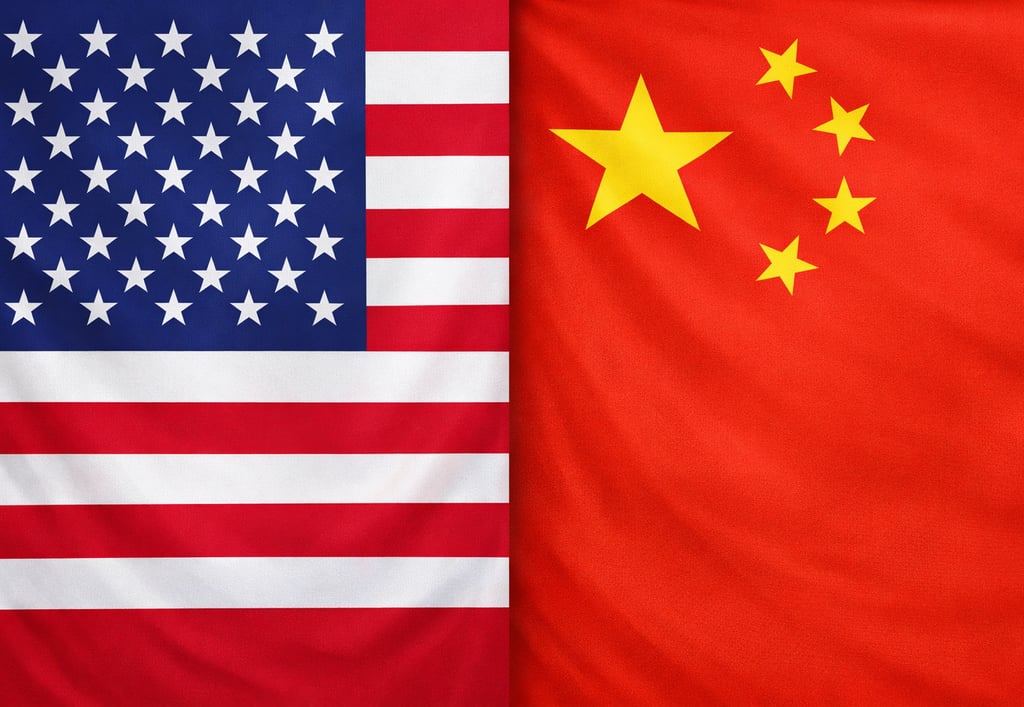
China’s Long-Term Strategy to Dominate Global Trade Under President Trump
As of February 19, 2026, global economic reports indicate that China is aggressively advancing a long-term strategy to solidify its dominance in global trade. This strategy is not merely a reaction to tariffs and trade policies introduced by U.S. President Donald Trump, but rather part of a broader structural plan designed to expand China’s influence in international markets for decades to come.
Despite continued U.S. tariffs and technology restrictions, China has managed to strengthen its global export position. In 2025, China’s total exports reached approximately $3.6 trillion, while its trade surplus exceeded $820 billion. These figures demonstrate that Beijing has successfully diversified its export markets and reduced its dependence on the United States. Chinese goods are increasingly flowing into Asia, the Middle East, Africa, and Europe, deepening China’s integration into global supply chains.
A key pillar of China’s strategy is the expansion of Free Trade Agreements (FTAs). Beijing is currently negotiating or advancing nearly 20 trade agreements across multiple regions. The objective is clear: ensure that even if U.S. trade barriers intensify, China maintains alternative economic corridors. One major focus is strengthening economic ties with the European Union. In 2025, bilateral trade between China and the EU reached nearly $900 billion, making the EU one of China’s largest trading partners.
China is also pursuing membership in the Comprehensive and Progressive Agreement for Trans-Pacific Partnership. If approved, this would grant Beijing preferential access to major Asia-Pacific economies and increase its influence over regional trade standards. Such a move would significantly enhance China’s ability to shape global trade rules, especially at a time when the United States is pursuing a more protectionist trade approach.
Another cornerstone of China’s global trade dominance is its industrial and supply chain superiority. China controls roughly 70% of global solar panel production and about 60% of lithium-ion battery manufacturing capacity. It is also a leading producer of electric vehicles (EVs), advanced machinery, rare earth mineral processing, and green energy technology. As countries accelerate their energy transition policies, China’s central role in renewable supply chains positions it as an indispensable global supplier.
Beijing is simultaneously emphasizing multilateral trade diplomacy. Within frameworks such as the World Trade Organization, China presents itself as a defender of open trade and globalization. It promotes economic cooperation with developing economies across Asia, Africa, and Latin America, positioning itself as a stable trade partner amid shifting Western policies.
China’s Belt and Road infrastructure investments further reinforce this strategy. With projects spanning over 150 countries and an estimated cumulative value exceeding $1 trillion, Beijing has expanded ports, railways, industrial zones, and logistics networks that facilitate trade routes centered around Chinese manufacturing and exports.
However, China’s rise is not without challenges. Domestic economic pressures remain significant. In 2025, China’s GDP growth stood at approximately 4.8%, slower than previous decades. The real estate sector continues to experience structural stress, youth unemployment remains elevated, and demographic decline poses long-term concerns. To address these vulnerabilities, China is shifting toward high-value industries such as artificial intelligence, semiconductor production, advanced manufacturing, and digital trade services.
Digital commerce is another critical front in China’s strategy. Cross-border e-commerce, fintech platforms, and digital payment systems are expanding rapidly. At the same time, Beijing is promoting greater international usage of the yuan in trade settlements. If successful, this effort could gradually reduce global reliance on the U.S. dollar in certain trade corridors.
In summary, China’s 2026 trade strategy rests on three primary pillars: expanding global trade agreements, dominating strategic supply chains, and strengthening its role in multilateral economic institutions. While President Trump’s current trade policies maintain pressure on Chinese exports to the United States, China has responded by accelerating diversification and deepening ties with alternative markets.
If Beijing successfully manages domestic reforms while sustaining global partnerships, it is well positioned to remain a dominant force in global trade well beyond the current U.S. administration. The evolving geopolitical landscape suggests that global trade competition in the coming decade will increasingly center on supply chain control, digital commerce infrastructure, and strategic trade alliances — areas where China is actively investing to secure long-term leadership.
Stay informed with the latest national and international news.
© 2026. All rights reserved.