
China Allocates $8.9 Billion for 2026 Consumer Goods Trade-In Scheme
China sets aside $8.9 billion to expand its 2026 consumer goods trade-in scheme, aiming to boost domestic demand and economic growth.
Raja Awais Ali
12/30/20252 min read
China Allocates Initial $8.9 Billion for Consumer Goods Trade-In Scheme in 2026
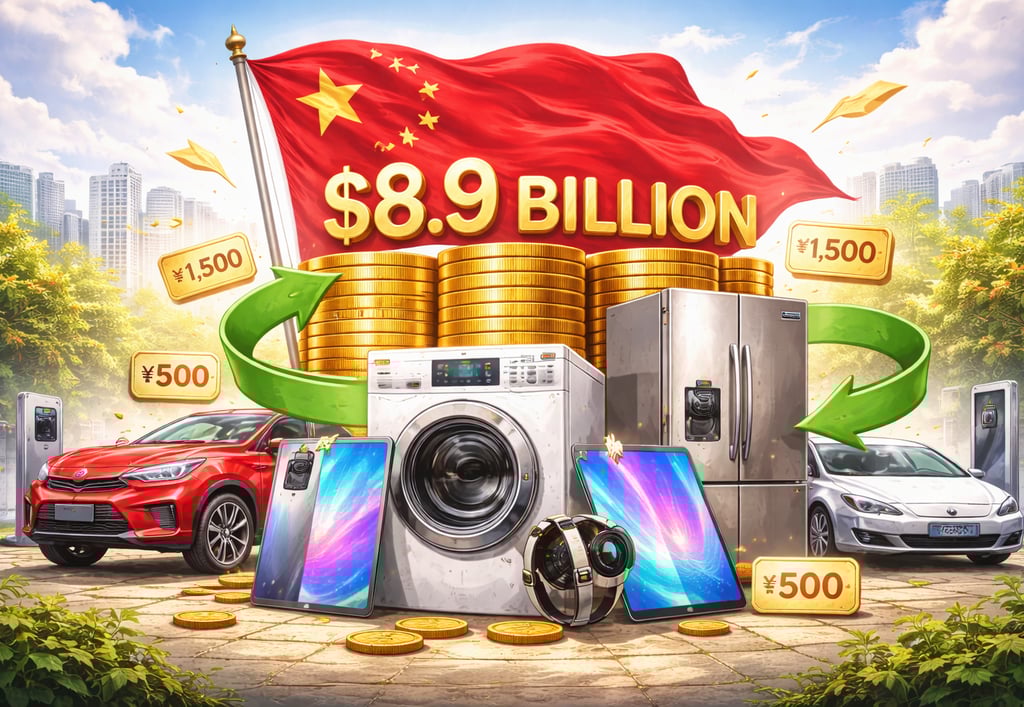
China has announced a major fiscal move to boost domestic consumption by allocating an initial 62.5 billion yuan (approximately $8.9 billion) for a nationwide consumer goods trade-in scheme scheduled for implementation in 2026. The decision, confirmed by Chinese economic authorities on December 30, reflects Beijing’s intensified efforts to strengthen internal demand amid ongoing economic pressures.
According to official statements, the funds will be sourced from special ultra-long government treasury bonds and represent the first phase of a broader consumption-stimulus plan. The trade-in program encourages households to replace outdated, energy-inefficient products with newer and more advanced alternatives, helping to stimulate spending while upgrading consumption quality.
The scheme was initially launched in 2024 and produced positive results, prompting the government to expand both its scale and scope. For 2026, the program will cover a wide range of consumer categories, including major home appliances, vehicles, and digital products. Authorities view the initiative as a key policy tool to stabilize growth as China faces weak exports, slowing industrial activity, and subdued consumer confidence.
Under the updated plan, consumers trading in large household appliances such as refrigerators, washing machines, air conditioners, and televisions will be eligible for subsidies of up to 15% of the purchase price, capped at 1,500 yuan per unit. These incentives are designed to promote energy-efficient products and support manufacturers during a period of uneven demand.
The program also provides strong support for new energy vehicles (NEVs). Consumers scrapping older vehicles and purchasing NEVs may receive subsidies of up to 20,000 yuan, while those replacing existing cars with newer models may qualify for incentives of up to 15,000 yuan. Officials believe this will further accelerate China’s transition toward cleaner transportation and reduce carbon emissions.
A notable expansion in the 2026 scheme is the inclusion of digital and smart devices. Products such as smartphones, tablets, smartwatches, and wearable devices will now qualify for 15% rebates, with a maximum subsidy of 500 yuan per device. This move aims to attract younger consumers and support China’s growing digital economy.
China’s National Development and Reform Commission noted that household consumption currently accounts for roughly 40% of the country’s gross domestic product, a figure Beijing aims to raise in order to reduce reliance on exports and infrastructure spending. Policymakers see domestic consumption as a long-term driver of sustainable growth.
Economists say the early allocation of funds demonstrates the government’s proactive stance ahead of 2026, particularly as China prepares for major holidays such as the Spring Festival, when consumer spending typically peaks. Analysts expect the trade-in scheme to boost sales across electronics, home appliances, and automotive sectors while improving overall market sentiment.
In summary, China’s decision to allocate nearly $8.9 billion for its 2026 consumer goods trade-in program underscores a strategic shift toward strengthening domestic demand. The initiative highlights Beijing’s determination to maintain economic stability and promote consumption-led growth in the face of global economic uncertainty.
Stay informed with the latest national and international news.
© 2026. All rights reserved.