
Australia Honors Bondi Beach Attack Victims as Albanese Faces Public Backlash
Australia marks a National Day of Reflection for Bondi Beach attack victims as PM Albanese faces public backlash over the government’s response.
Raja Awais Ali
12/21/20252 min read
Australia Honors Bondi Beach Attack Victims as Albanese Faces Public Backlash
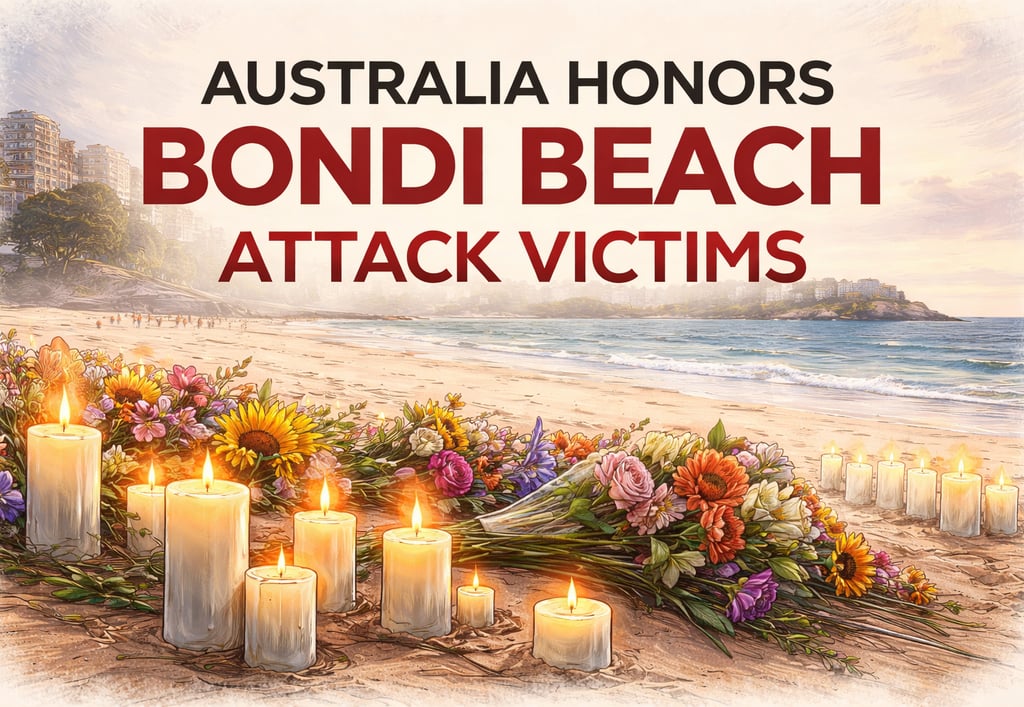
Australia marked 21 December 2025 with a nationwide National Day of Reflection to honor the victims of the deadly attack at Sydney’s iconic Bondi Beach, a tragedy that shocked the nation and deeply affected communities across the country. The day was dedicated to remembrance, unity, and solidarity with the families of those killed and injured.
Thousands of people gathered at Bondi Beach, where the main memorial was held under heightened security. Candles were lit, flowers were laid, and moments of silence were observed nationwide. Religious leaders, community representatives, and civic figures addressed the crowd, condemning violence and hatred while emphasizing tolerance, unity, and national resilience.
The Bondi Beach attack, widely described by authorities as a hate-motivated extremist act, claimed multiple innocent lives and left several others injured. Since the incident, Australia has been grappling with urgent questions around public safety, extremism, and social cohesion. The memorial events reflected both collective grief and a strong resolve to prevent similar violence in the future.
Prime Minister Anthony Albanese attended the main vigil at Bondi Beach, but his presence drew a mixed and emotional response. While some attendees listened respectfully, sections of the crowd expressed anger through boos and chants, highlighting public frustration with the federal government’s handling of the aftermath. Critics said the Prime Minister did not engage quickly or personally enough with grieving families in the days immediately following the attack.
In contrast, several New South Wales state officials received applause for their visible and ongoing engagement with affected communities. The differing reactions underscored growing public expectations that political leaders demonstrate empathy not only through statements, but through direct presence and action during times of national tragedy.
Addressing the gathering, Albanese paid tribute to the victims and reaffirmed his government’s commitment to confronting hate-driven violence. He announced a review of security preparedness and intelligence-sharing arrangements, aimed at improving early detection of extremist threats. The Prime Minister stressed that protecting Australians from violence rooted in intolerance remains a top national priority.
Beyond the memorials, the Bondi Beach tragedy has reignited a broader national debate on how Australia should confront rising extremism and hate crimes. Civil society groups and community leaders have called for stronger education initiatives, firmer enforcement against hate-based offenses, and deeper engagement with vulnerable communities to counter radicalization.
The events of 21 December were not only a moment of mourning, but also a reflection of Australia’s democratic accountability. Public reactions at the vigil highlighted the emotional connection between citizens and their leaders during times of crisis. As the nation moves forward, the Bondi Beach attack stands as a solemn reminder of the need for vigilance, unity, and sustained action to ensure safety, justice, and social harmony for all Australians.
Stay informed with the latest national and international news.
© 2026. All rights reserved.