
Why Americans Pay for Unfinished Electricity Projects: The Hidden CWIP Cost Explained 2026
Millions of Americans are paying electricity bills for power projects that are not yet completed. Learn how the CWIP system works, why utility companies charge early, and how it is impacting energy prices across the United States in 2026.
Raja Awais Ali
5/10/20264 min read
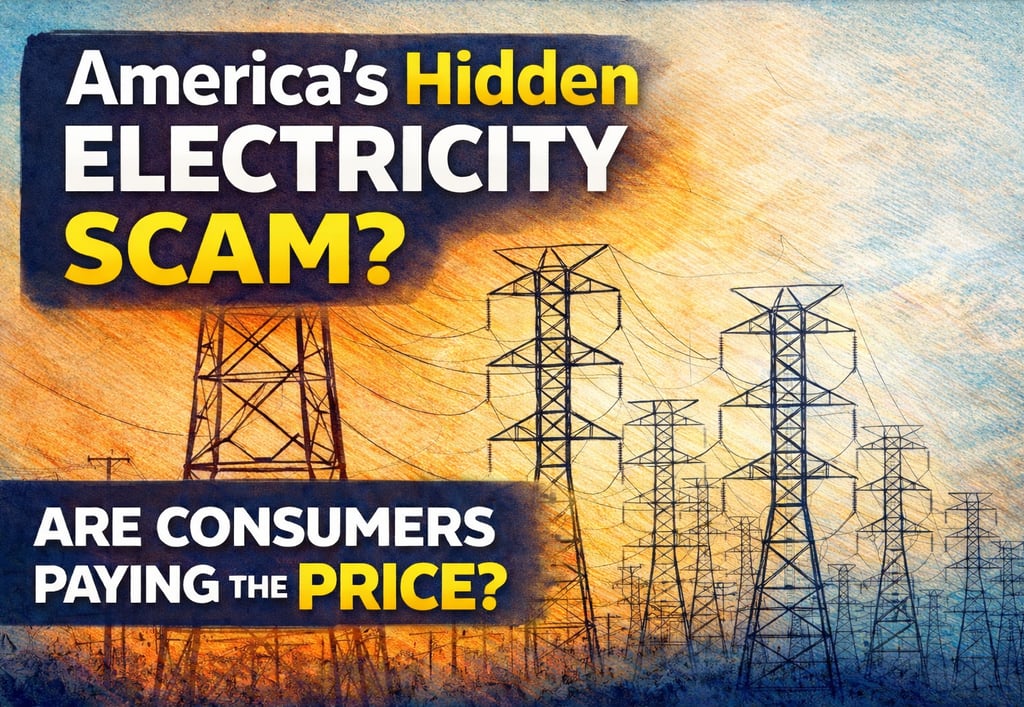
Why Americans Pay for Unfinished Electricity Projects: The Hidden CWIP Cost Explained
In the United States, a new financial system in the electricity sector is quietly changing how people pay for power. Millions of households are now paying electricity bills for projects that are still under construction and not yet producing energy. This system is known as Construction Work In Progress (CWIP).
Under this model, utility companies start collecting money from customers before a power plant, transmission line, or energy project is fully completed. This means people are paying today for electricity infrastructure that may take years to finish, and in some cases, may even face delays or cost overruns.
Earlier, the traditional system worked differently. Utility companies would first complete a project and then recover the cost from consumers once the facility started producing electricity. But now, policy changes in many US states have shifted this approach to speed up infrastructure development and meet rising energy demand.
The main reason behind this shift is the growing pressure on the American power grid. Electricity demand is increasing rapidly due to data centers, artificial intelligence systems, and electric vehicles. Experts estimate that US electricity demand could rise by more than 2 percent every year until 2045, compared to only around 0.5 percent annual growth in previous years.
Because of this rising demand, CWIP policies have expanded quickly. Today, around 40 US states allow utilities to charge customers during construction. Just a decade ago, this number was less than half. While this helps utilities secure funding faster, it also increases monthly electricity bills for consumers.
The financial impact is already visible in several large projects. In Georgia, a major nuclear power project known as Vogtle faced years of delay and massive cost escalation. The original budget was around 14 billion dollars, but it increased to nearly 35 billion dollars. As a result, households were forced to pay around 1000 dollars each over time through early billing charges.
In Nevada, another example shows how customers are paying about 4 dollars per month for a transmission project that will only be completed years later. Utility companies argue that this method reduces borrowing costs and spreads payments over time, avoiding sudden price spikes in the future. However, consumer analysts suggest that the actual benefit to customers may be very small and could take decades to appear.
A similar situation exists in Virginia, where one of the largest data center hubs in the world is located. Here, an offshore wind energy project worth 11.5 billion dollars is under construction. Customers have already paid nearly 2 billion dollars in advance. Monthly bills have increased by more than 11 dollars for many households. Utility companies claim that over a long period, this project will save money, but these savings are only expected in the distant future.
The main concern raised by experts is that CWIP shifts financial risk from companies to ordinary people. If a project is delayed, becomes more expensive, or fails, customers still pay the cost. Meanwhile, utility companies earn regulated profits on their investments, often between 9 percent and 12 percent, regardless of project success.
Over the past few years, electricity prices in the United States have increased by about 40 percent. In regions with heavy data center activity such as Virginia, Maryland, and Pennsylvania, prices are rising even faster. This has created what many call an energy affordability crisis, where basic electricity costs are becoming harder for families and businesses to manage.
Supporters of CWIP argue that this system helps prevent sudden price shocks in the future and ensures that critical infrastructure is built on time. However, critics say it creates a situation where consumers pay first and benefit later, even though the promised benefits are uncertain or far away.
Another major issue is transparency. Many consumers are not fully aware that part of their electricity bill is going toward future projects rather than current usage. This lack of awareness has led to growing public concern about fairness and accountability in the energy system.
At the same time, the US is expected to invest more than one trillion dollars in energy infrastructure over the next few years. This massive investment is seen as necessary to modernize the grid, but it also strengthens the role of CWIP financing, which continues to shift costs onto consumers.
The biggest debate now is about fairness. Should ordinary electricity users act as early investors in large energy projects, or should financial risks be shared more equally between companies and customers?
In Georgia, public reaction has already shown the political impact of this system. Due to rising electricity costs linked to the nuclear project, voters removed two public service officials in a recent election. This shows that public frustration over electricity pricing is becoming a serious political issue.
Looking ahead, experts warn that if CWIP continues to expand without strict regulation, electricity bills may keep rising even faster. Households could end up paying not only for the electricity they use today but also for projects that may not benefit them for many years.
In conclusion, the CWIP system reflects a major shift in how energy infrastructure is financed in the United States. While it helps speed up construction and support long-term grid expansion, it also places a growing financial burden on everyday consumers. Without stronger transparency and better regulation, the balance between development and affordability may continue to worsen in the coming years.
Stay informed with the latest national and international news.
© 2026. All rights reserved.