
American CEOs Push Back Mildly Against Trump’s Economic Policies as Government Role Expands
Top American CEOs voice cautious concern over President Trump’s economic policies, warning that increased government control could harm markets and investment.
Raja Awais Ali
1/17/20263 min read
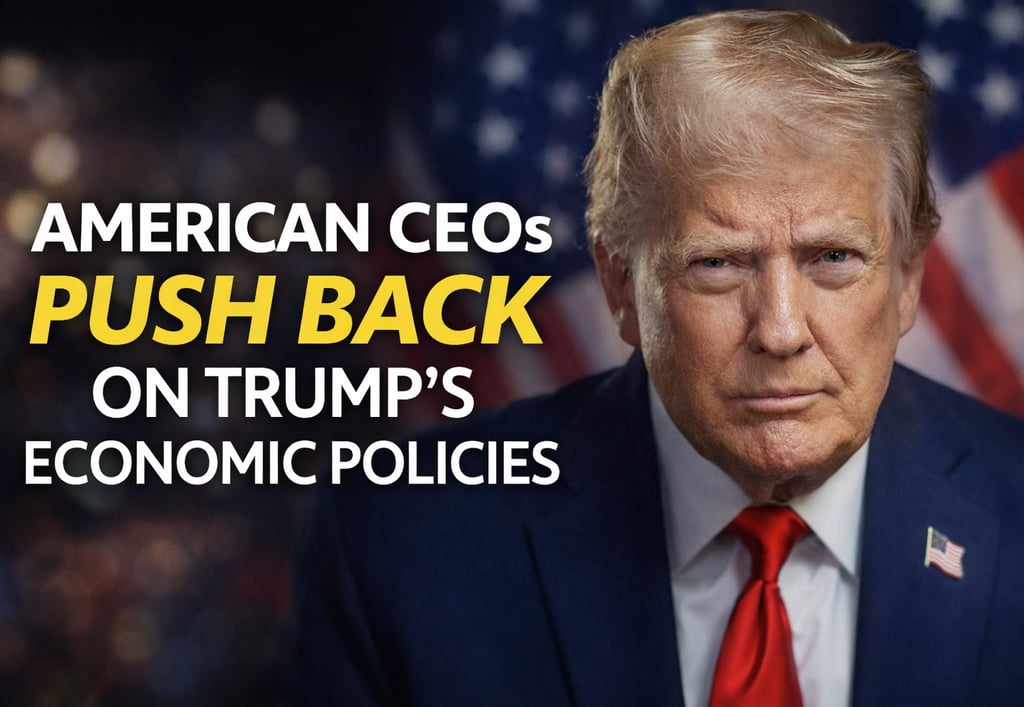
American CEOs Push Back Mildly Against Trump’s Economic Policies
Senior executives from America’s largest corporations have begun expressing cautious but meaningful concern over President Donald Trump’s latest economic and trade policies. While avoiding direct confrontation with the White House, business leaders are increasingly warning that expanded government intervention could undermine free markets, weaken investor confidence, and slow long-term economic growth.
Since returning to office, President Trump has placed strong emphasis on economic nationalism, increased state involvement in key sectors, and policies aimed at providing immediate relief to American consumers. These moves, while popular with parts of the electorate, have raised alarms within corporate boardrooms across the country.
Trump’s Economic Strategy and Government Expansion
President Trump’s current economic agenda focuses on protecting domestic industries, limiting foreign competition, and placing stricter oversight on financial institutions. Among the most debated proposals are a temporary cap on credit-card interest rates, expanded tariffs on selected imports, and increased regulatory scrutiny of banks and multinational corporations.
The administration argues that these measures are designed to reduce inflation, protect middle-class households, and curb what Trump has repeatedly described as “corporate excess.” However, many CEOs believe that such policies risk distorting markets and discouraging private investment.
U.S. Chamber of Commerce Signals Unease
Suzanne Clark, President of the U.S. Chamber of Commerce, delivered one of the clearest signals of corporate discomfort during a recent business forum. Without naming Trump directly, she emphasized that American companies must defend free enterprise “without fear” and warned against excessive government control of business decisions.
Clark stressed that economic stability depends on predictable policies, open trade, and strong private-sector leadership. According to the Chamber, sudden policy shifts and heavy regulation could reduce job creation and limit America’s competitiveness in global markets.
Banking Industry Raises Red Flags
Major U.S. banks have also voiced measured opposition to the administration’s proposal to cap credit-card interest rates. Executives from institutions such as JPMorgan Chase and Citigroup cautioned that strict limits on interest rates could reduce access to credit, particularly for lower-income consumers and small businesses.
Bank leaders argue that while consumer protection is important, artificially restricting lending conditions may lead to tighter credit standards, fewer loans, and slower economic activity. Their comments reflect broader concern that political intervention in financial markets could have unintended consequences.
Federal Reserve Independence Under Scrutiny
Another area of growing tension involves the Federal Reserve. President Trump has repeatedly criticized the central bank in the past and has recently suggested that its policies should align more closely with government priorities.
JPMorgan Chase CEO Jamie Dimon publicly defended the independence of the Federal Reserve, stating that monetary policy must remain free from political pressure. According to Dimon, undermining the Fed’s autonomy could fuel inflation, destabilize markets, and damage global confidence in the U.S. financial system.
Why CEOs Are Choosing a Mild Tone
Despite these concerns, most CEOs have stopped short of openly challenging President Trump. Analysts say this reflects a strategic decision to avoid potential political backlash or regulatory retaliation. Instead, corporate leaders are framing their objections around long-term economic principles rather than direct criticism of the president.
This approach marks a shift from Trump’s first term, when several executives openly opposed White House policies. The current climate has encouraged a more cautious and calculated response from corporate America.
Global and Political Implications
Trump’s protectionist stance has also drawn attention from international trading partners, particularly in Europe and Asia. Business leaders warn that rising tariffs and trade barriers could isolate U.S. companies and disrupt global supply chains.
At home, the debate highlights a broader struggle between political control and market-driven growth. CEOs argue that sustainable prosperity depends on innovation, investment, and economic freedom rather than short-term political gains.
Conclusion
American CEOs are sending a clear, if restrained, message to President Trump: expanded government control carries real economic risks. While their opposition remains measured, it reflects deep concern about the long-term direction of U.S. economic policy. As political pressures grow, analysts say corporate voices may become more outspoken, shaping the next phase of America’s economic and political debate.
Stay informed with the latest national and international news.
© 2026. All rights reserved.