
Airlines Reroute and Cancel Flights as Iran Tensions Escalate | Latest Aviation News 2026
Global airlines reroute and cancel flights amid rising Iran tensions. Full authentic report on airspace closures and travel disruptions.
Raja Awais Ali
1/24/20262 min read
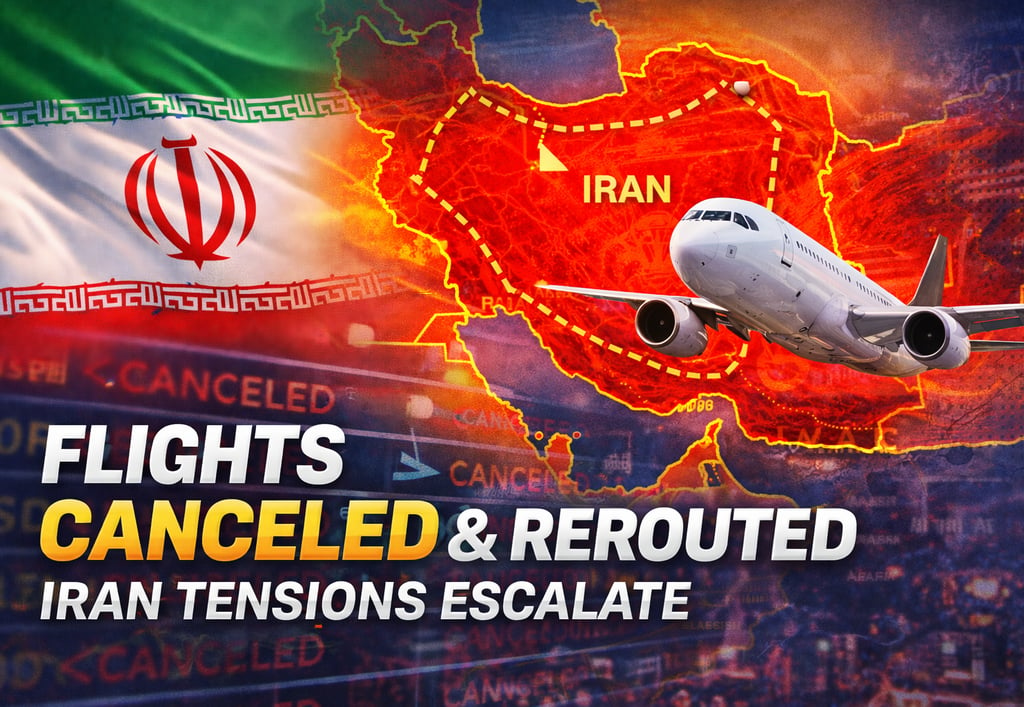
Airlines Reroute and Cancel Flights as Tensions Rise Over Iran
Rising geopolitical tensions surrounding Iran have triggered widespread disruption across the global aviation industry, forcing airlines to reroute flights, cancel services, and avoid sensitive airspace across the Middle East. The developments, reported on 24 January 2026, have affected international travel routes connecting Europe, Asia, and the Gulf, causing delays for thousands of passengers worldwide.
The situation escalated amid heightened political and military tension between Iran and the United States, accompanied by increased military activity in the region. Aviation authorities and airlines responded swiftly, prioritizing passenger safety and operational security as uncertainty grew over the stability of key air corridors.
Several major international airlines, including Air France, KLM, Lufthansa, British Airways, and Wizz Air, announced temporary suspensions or rerouting of flights that would normally pass through Iranian, Iraqi, and neighboring airspace. These carriers confirmed that aircraft are now operating on longer alternative routes, significantly increasing flight durations and fuel consumption.
KLM stated that it would avoid flying over Iran and surrounding regions until further notice, citing security concerns. As a result, flights to destinations such as Dubai, Riyadh, and Tel Aviv have either been suspended or diverted via safer air corridors. Air France also temporarily halted selected Middle East services, while the Lufthansa Group suspended flights to Tehran for an extended period.
North American airlines have taken similar precautions. Several U.S. and Canadian carriers canceled flights to high-risk destinations, particularly in Israel and parts of the Gulf region. Aviation experts noted that such measures reflect standard safety protocols when regional instability threatens commercial aviation.
The situation worsened after Iran briefly restricted access to its airspace, forcing multiple international flights to change course mid-air. During this period, aircraft were diverted to alternative airports or rerouted over longer paths through Saudi Arabia, Egypt, and Central Asia. These sudden changes caused congestion at major transit hubs and led to operational challenges for airline crews.
Passengers have borne the brunt of the disruption. Major airports such as Dubai, Abu Dhabi, Doha, and Istanbul experienced delays, cancellations, and overcrowding. Many travelers faced extended layovers, missed connections, and uncertainty over rebooking options. Airlines issued advisories urging passengers to check flight status regularly and remain flexible with travel plans.
Aviation analysts explain that geopolitical conflict poses one of the most serious risks to the airline industry. Missile threats, military aircraft activity, and sudden airspace closures force airlines to make rapid decisions to protect passengers and crew. Although rerouting flights increases costs and travel time, safety remains the industry’s top priority.
The financial impact on airlines is also significant. Longer routes mean higher fuel consumption, increased operating expenses, and scheduling disruptions. Industry experts warn that prolonged instability could further strain airline profitability, which is still recovering from previous global disruptions.
In summary, the events of 24 January 2026 demonstrate how regional tensions around Iran have evolved into a global aviation challenge. What began as a geopolitical standoff has now disrupted international air travel, affecting airlines, airports, and passengers alike. If tensions continue or escalate further, aviation authorities warn that additional cancellations and route changes are likely in the coming days.
Stay informed with the latest national and international news.
© 2026. All rights reserved.